
Car transfers
Wheelchair to Car Transfer: How to Get In and Out Safely
A car transfer moves someone from a wheelchair onto a car seat in one short turn. Park level, with room for the door to open fully. Angle the chair to the seat, lock both wheel locks, and swing the footrests clear. Guard their head as they sit, then lift their legs in one at a time. Nobody holds on to the door itself.
Show guidance for someone who
Before you start
- Car is on level ground, not a slope, not gravel, with room for the door to open all the way
- Car seat is slid back as far as it goes and reclined slightly
- You know whether the car seat sits higher or lower than the wheelchair cushion
- Gait belt is on, with no frayed webbing, pulled stitching, or a buckle that slips
- You know how the footrests on your own chair swing away or lift off
- The ground between the chair and the door is clear of curbs, puddles, and ice
The procedure
Bring the chair in at a slight angle
Roll the chair up to the open door and stop it at roughly thirty to forty five degrees to the car seat, as close as it will go.
Shepherd Center teaches this slight angle for car transfers because it shortens the turn. Square on, the gap is too wide. Parallel, there is nowhere for their knees to go.
Lock both wheel locks
Set the wheel lock on each side, then push down on an armrest to confirm the chair does not creep.
Wheelchair manuals are blunt about this. Always engage the wheel locks before transferring, and keep them engaged for the whole transfer.
Swing the footrests fully clear
Pull the swing away release lever forward on each side so the footrest swings outward, and lift it off the hinge pins if yours detaches.
A footrest left folded up is still a shin height metal bar in the exact path their leg has to travel.
Move their hips to the front edge of the seat
Walk their hips forward in small shifts, one side then the other, until both feet rest flat on the ground.
Feet must reach the ground, never the footplates. Every wheelchair manual warns that standing or stepping on a footplate can tip the chair forward.
Put their hands on something that cannot move
Place their hands on the door frame, a door frame grab handle, or the edge of the car seat.
Not the door itself. A door swings, and it takes their balance with it. Stroke caregiver guidance names the door frame, the seat edge, and the dashboard edge as the safe handholds.
Bring them up to standing
Count it out loud, then rise with them, holding the gait belt underhand at their side while they push up through their legs.
The belt steadies and guides. It never takes their body weight. If their legs cannot do the standing, this is the wrong transfer for them today.
Turn until the backs of their legs touch the seat
Pivot on your own feet in small steps, moving with them rather than twisting at your waist.
The American Academy of Orthopaedic Surgeons tells home caregivers to pivot on one foot instead of twisting the trunk. Twisting under load is how caregivers hurt their own backs.
Guard their head as they sit down
Rest your flat hand over the top of their head as they lower, and let them sit all the way back before you let go.
This is standard stroke and senior caregiving guidance. The upper door frame sits right where a head goes on the way down, and nobody sees it coming.
Lift their legs in one at a time
Once they are fully seated, support under the knee and the ankle and bring one leg over the door sill, then the other.
Caregiver guidance from SingHealth is clear that the person sits down completely first, then the legs come in. Legs first turns the sit into a fall backward.
Use caution
- Wheel locks are not a parking brake. On a slope they hold far less than you think, so move the car instead.
- Check the lap belt lies low across the hips before you drive, especially if a cushion has raised them.
- A gait belt is a handhold. It does not make an unsafe transfer safe, and it is never used to lift someone.
- Reading a page is not training. Ask a physical or occupational therapist to watch you do this once in your own car.
Stop and get help
- Their knees buckle or give way as they come up to standing
- You are taking their weight through the belt rather than steadying them
- The ground is sloped, loose, or wet and you cannot move the car
- You cannot get the chair within arm’s reach of the seat
- They cannot control their head and you have nobody to guard it
Print the nine-step checklistOne page, large type, keep it in the glove box.
Where to park, and why it decides everything
Almost every hard car transfer is a parking problem. Stroke caregiver guidance says to park on the level, not on a slope, and to avoid high curbs and uneven ground. The door has to open all the way, because a half open door puts the frame exactly where their shoulder needs to be.
The ADA Standards give you a benchmark for how much room this really takes. The access aisle beside an accessible car space has to be at least 60 inches wide. A van accessible space needs either 132 inches with a 60 inch aisle, or 96 inches with a 96 inch aisle.
That is the space a transfer wants. A regular slot between two other cars is not it, which is why the aisle beside an accessible space matters more than the sign on the post.
At home, pick one spot and use it every time. Flat, wide, and away from the mailbox is worth more than any piece of equipment on this page.
Sedan or SUV: which one is actually easier
People assume the SUV wins. It depends entirely on the height of your wheelchair cushion.
A study of independent drivers with paraplegia, published in the Journal of Spinal Cord Medicine, measured driver seat heights by vehicle type. Sedans averaged 22 inches, mid height vehicles 28 inches, and high profile vehicles such as vans, SUVs and trucks 36 inches. The researchers also found that the body lift phase of the transfer took longer as seat height went up.
So neither type wins on its own. A sedan seat below the cushion means an easy sit down and a hard stand up on the way out. An SUV seat above the cushion means the opposite.
The easiest car is the one whose seat sits closest to level with the wheelchair cushion. That is why a mid height crossover suits a lot of families better than either extreme.
Measure both before you buy anything. A tape measure from the ground to the top of the wheelchair cushion, and from the ground to the top of the car seat, answers the question in thirty seconds.
Two small things that make this easier
Neither of these replaces technique, and neither helps someone who cannot stand. They both remove one specific problem: nothing solid to hold on to, and a turn that grinds against the seat fabric.
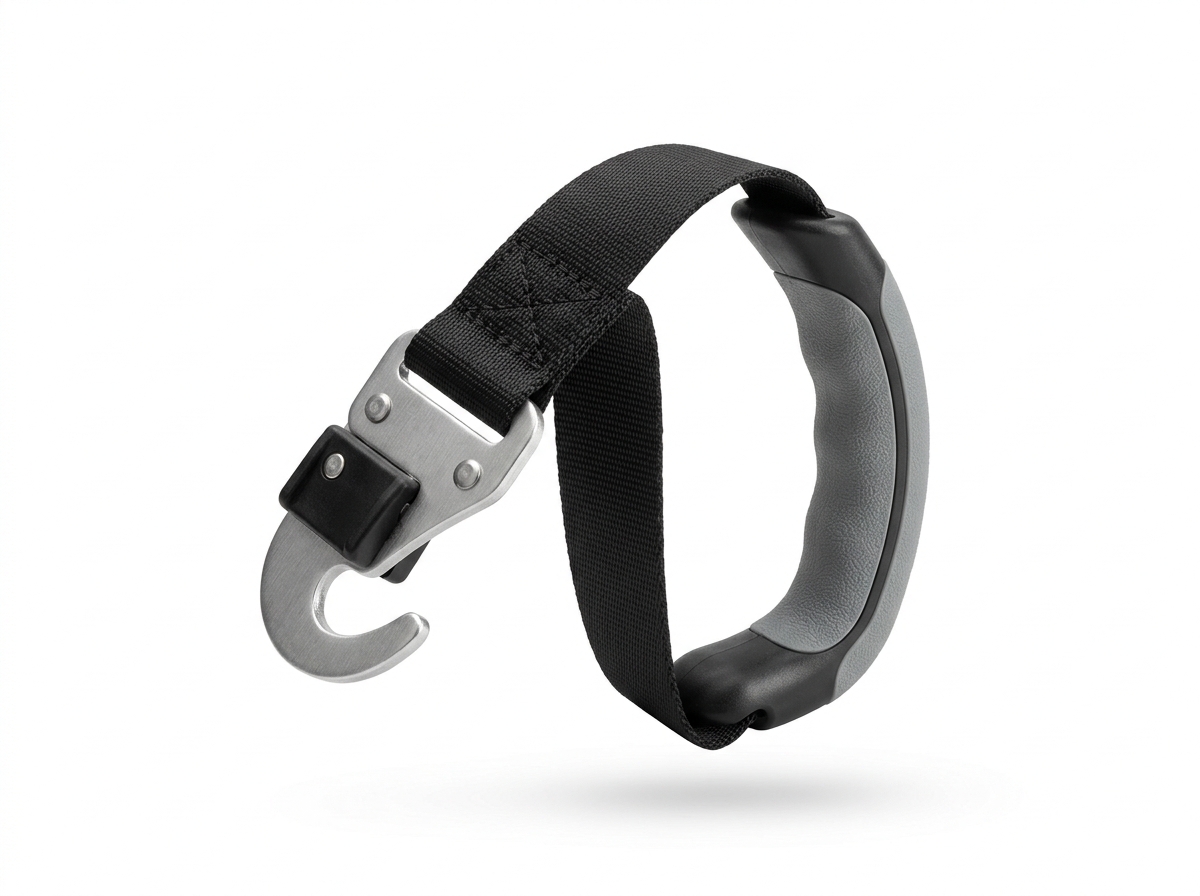
Door frame grab handle
Stander HandyBar
A removable handle that slots into the door latch striker and gives a firm push-up point at the right height.
- Fits
- Vehicles with a U-shaped door latch striker held on by two bolts or screws
- Does not fit
- Vehicles with a striker bolt instead of a U-shaped latch. Stander states it will not work on these.
- Fit check
- Open the door and look at the metal loop on the body of the car. A loop works, a single stud does not.
- Extras
- Seat belt cutter and window breaker built into the handle
- Typical price band
- $10 to $20
- Weight rating
- Check the rating printed on the packaging for your own unit before anyone leans on it
Honest limitation: it only fits a U-shaped door latch striker. If your car uses a striker bolt, this handle will not work at all, and no amount of force will make it seat. Check your own door before you order.
We earn a commission on this link. It does not change the price you pay, and it does not influence which equipment we cover.
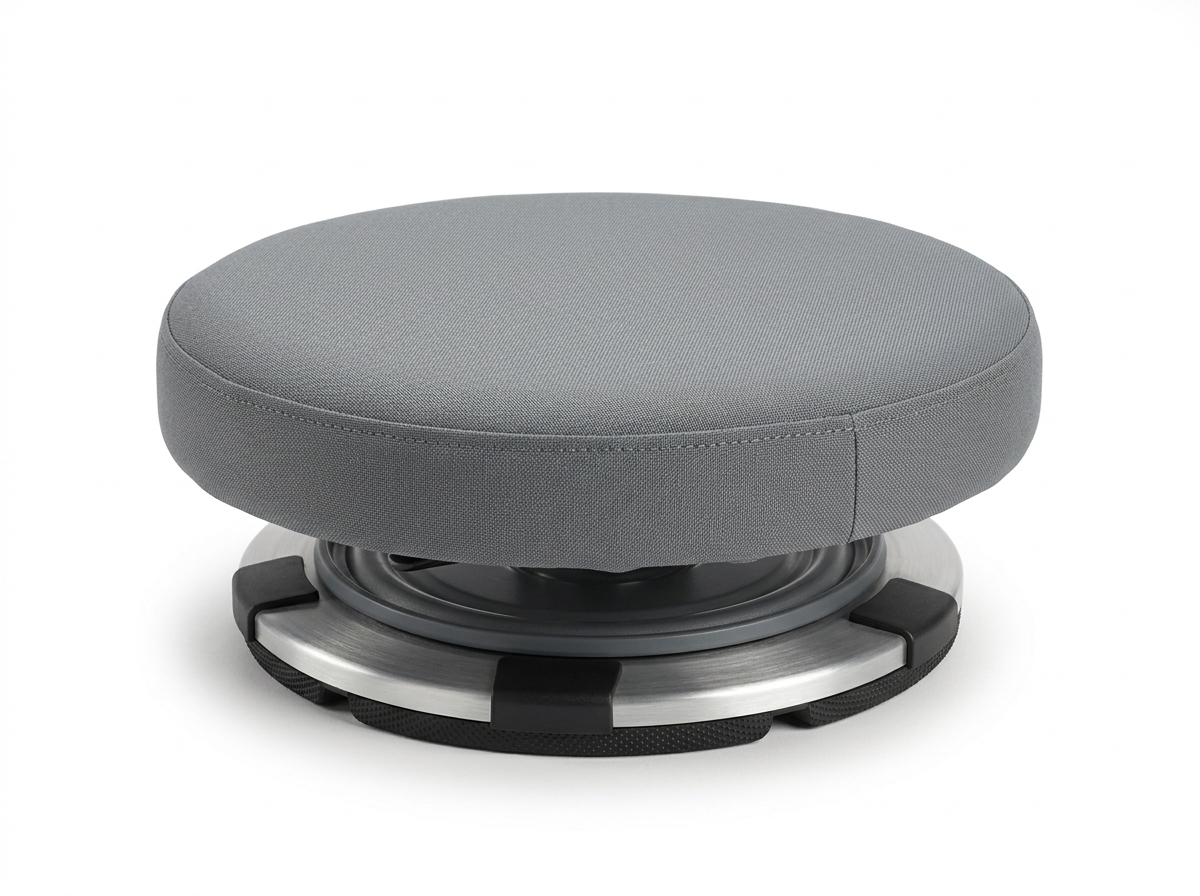
Swivel cushion
Stander Auto Swivel Cushion Seat
A padded disc that turns under them, so the hips and legs rotate into the car instead of dragging around.
- Size
- 18 inches across, per Stander
- Rotation
- Full 360 degrees, so it works for getting in and for getting out
- Base
- Non-slip, sits on flat or contoured seats, no assembly
- Typical price band
- $15 to $30
- Weight rating
- Check the label on the cushion you receive rather than assuming
Honest limitation: it only helps the turn. It does nothing to get them onto the seat in the first place, and it raises them, which makes the sit down a longer drop and changes how the lap belt sits. Check the belt lies low across the hips, and take the cushion out if it will not.
We earn a commission on this link. It does not change the price you pay, and it does not influence which equipment we cover.
Getting back out
Out is the same sequence backward, and it is the harder direction, because standing up from a car seat is a real leg job.
- Park the chair at the same slight angle and lock both wheel locks before you open the door wide
- Undo the belt, then bring both legs out onto the ground one at a time
- Have them shuffle forward to the front edge of the car seat, feet flat
- Hand on the door frame or the grab handle, then stand on your count
- Turn to the chair, feel the seat behind their legs, then sit
Only put the footrests back on once they are sitting and settled. Doing it before means fitting metal around legs that are still moving. The same principle applies in a stand pivot transfer anywhere else in the house.
Folding and loading the chair without wrecking your back
The transfer takes seconds. The chair goes in and out several times a day, and that is what actually injures caregivers over a year.
Fold it in the order the manuals give: take the footrests off, lift the cushion out, then grab the seat upholstery at the center front and center rear with both hands, pull sharply, and lift. Tip the chair on its side and press the sides together if yours folds flat that way.
Then lift the way the American Academy of Orthopaedic Surgeons tells home caregivers to lift. Bend at the hips and knees, not the back. Keep the load against your body. Do not twist while you are holding it, pivot on a foot instead. If it is too heavy or in an awkward position, get help rather than muscling it.
Placement matters more than people expect. In that same study of drivers with paraplegia, the ones who loaded the frame into the back seat had measurably weaker shoulder internal rotators than those who did not, which the authors attributed to the extreme reach that position demands. A trunk or a front footwell usually costs your shoulders less than reaching behind the seat.
Weigh your folded chair on a bathroom scale once. Knowing the real number tells you whether you need a second person, a trunk hoist, or a lighter chair, and it is a better basis for that decision than how it felt this morning.
When this stops working
This transfer needs someone who can take some weight through their legs, hold on, and follow a count. When any one of those goes, the car transfer is the first thing in the day to become unsafe, usually long before bed transfers do.
Shepherd Center notes that using a powered lift to get in and out of a car is harder than it looks, because the bend in the lift arm gets in the way of the height you need.
The MND Association, a UK charity for motor neurone disease in England, Wales and Northern Ireland, makes a related point about the chair itself. A powered wheelchair often cannot be lifted into a car at all, and the realistic options are a trunk hoist if the car is big enough, or a wheelchair accessible vehicle. Ask your therapist to assess for both before you are forced into the decision.
Common questions
Is a sedan or an SUV easier to transfer into?
Whichever one is closest to level with the wheelchair cushion. Measured driver seat heights in one study averaged 22 inches for sedans, 28 for mid height vehicles, and 36 for vans, SUVs and trucks. A low seat is an easy sit and a hard stand. A high seat is the reverse.
Can one person do a car transfer alone?
Yes, if the person can push up through their legs, grip a handhold, and follow instructions. If any of those three is missing, you need a second person or equipment. Have a physical or occupational therapist watch you do it once in your own car before you rely on it.
What if they cannot stand at all?
Then this is the wrong technique, and no cushion or handle changes that. Look at a full body lift for transfers at home and at a wheelchair accessible vehicle or a trunk hoist for the car. Your wheelchair service can assess for both.
Where should the wheelchair go once they are in?
Wherever costs your shoulders least. In one study of drivers with paraplegia, most loaded the frame into the back seat, and that group had weaker shoulder internal rotators than the rest. A trunk or the front footwell avoids the deep twisting reach behind the seat.