
Personal care
How to Give a Bed Bath: Bathing and Personal Care Without a Shower
A bed bath washes someone completely without moving them to a bathroom, using a basin, a cloth and a towel, or no-rinse wipes when even a basin is too much. You work from the cleanest area to the dirtiest, keep everything you are not washing covered, and test the water on your own skin before it touches theirs.
Say what you are about to do before each part of it. This is an adult being washed by their family, and the difference between care and being handled is entirely in how you do it.
Show guidance for someone who
Before you start
- Basin filled, two washcloths, two towels, a bath blanket or clean sheet, and clean clothes, all within reach of the bed
- Door closed, curtains drawn, phone on silent
- Gloves for the perineal part, plus any barrier cream the care plan calls for
- Clean bedding and a fresh incontinence pad ready, so you are not leaving them uncovered to go find one
- You have asked which parts they want to wash themselves
- You have asked whether they want you doing this, or someone else
The procedure
Say what you are about to do
Tell them the order you will work in before you touch anything, then keep narrating as you go, one part at a time.
A 2023 review in the journal Nursing Inquiry found that washing an older adult slides easily into treating a body as a set of parts to be worked through. Speaking first is what stops that.
Cover them from shoulders to feet
Lay a bath blanket or clean sheet over the whole body, then take the top bedding out from underneath it. Uncover only the part you are washing, and cover it again before you move on.
Nursing assistant procedure says to expose the perineum only, never the whole body. Applying that same rule to every part of the bath is what keeps a wash from feeling like an inspection.
Test the water on the inside of your own wrist
Home health aide training texts cap bed bath water at 105 degrees Fahrenheit. Test it yourself, then offer them a wet cloth on the back of the hand so they can agree it is comfortable.
MedlinePlus, the consumer health service of the US National Library of Medicine, notes that aging skin is less able to sense heat, cold and pressure. Waiting for someone to tell you it is too hot is not a safety check.
Wash the face with plain water
Start at the eyes, wiping from the inner corner outward, using a fresh corner of the cloth for each eye. Then the rest of the face, the ears and the neck. No soap.
Facial skin is where soap does the most visible drying, and MedlinePlus advises against strongly detergent or heavily perfumed soaps on aging skin generally.
Work down the body, one part at a time
Arms and underarms, hands, chest and abdomen, then legs and feet. Use a clean area of the cloth for every stroke, and swap to a fresh cloth the moment the first one stops being clean.
This order is clean to dirty. Going back over a washed area with a cloth that has already been somewhere dirtier is the exact thing the rule exists to prevent.
Change the water when it cools or clouds
Refill partway through, and again any time the water is cool, soapy or visibly dirty. Test the fresh water the same way you tested the first basin.
A 2019 study in the American Journal of Infection Control described patient bath basins as a possible source of health care acquired infection. Fresh water is the cheapest fix available to you.
Wash the perineum last, front to back
For a woman, wash from front to back in single strokes, turning the cloth each time. For a man, start at the tip and work outward in circles. If he is uncircumcised, move the foreskin back to wash, then slide it forward again.
Returning the foreskin is written into training checklists as a required step, not a detail. Leaving it retracted causes swelling and pain, and it is the step people forget when they are rushing the part they find awkward.
Pat every fold dry
Under the breasts, in the groin and abdominal folds, in the armpits, behind the knees, and between every toe. Pat. Do not rub.
Trapped moisture in a fold is where skin breaks down first, and MedlinePlus warns that rubbing or pulling on thin skin causes skin tears. Patting is not fussiness, it is the technique.
Moisturize the skin you just washed
Put a plain moisturizing cream on arms, legs, back and any dry area. Leave it off between the toes.
The National Institute of Diabetes and Digestive and Kidney Diseases, part of the US National Institutes of Health, says not to put lotion or cream between the toes, because the moisture there invites infection.
Use caution
- Gentle is measurable. A 2023 BMC Nursing study found three light passes removed 80 percent or more of soil, while harder wiping reduced older patients’ skin barrier function.
- MedlinePlus advises against washing the whole body every day, because it dries skin further. A full wash on some days and a partial wash on others is usually enough.
- Look at the skin while you wash it. This is the best daily skin check anyone in the house is going to get.
- Nail care for anyone with diabetes belongs to a nurse or a podiatrist, not to you at the bedside.
Stop and get help
- Redness over a bony point that does not fade, or any new open area or blister
- Skin tears while you are washing or drying
- Pain, swelling, discharge or a strong odor in the perineal area
- A foreskin that will not slide forward again
- They become short of breath or frightened while lying flat for the wash
Print the nine-step checklistOne page, large type, tape it inside the closet door.
Why soap and hot water make it worse
You are washing skin that has changed. MedlinePlus describes the outer layer thinning with age, oil glands producing less, the fat layer under the skin getting thinner, and blood vessels becoming fragile enough that rubbing or pulling causes tears and bruising.
So the usual instincts are wrong here. Hot water and a good scrub feel like a proper wash and are the two things that do the most damage. MedlinePlus guidance on preventing pressure sores says to use a soft sponge or cloth, not to scrub hard, to avoid talc powder and strong soaps, and to use moisturizing cream every day.
Temperature is the same story. The National Institute of Diabetes and Digestive and Kidney Diseases says to wash in warm, not hot, water and to test it rather than guess. For feet it puts 90 to 95 degrees Fahrenheit in the safe range and suggests a thermometer or your elbow. Your own hands are a poor gauge after a few minutes in the basin.
No-rinse products, and when they are the right call
No-rinse wipes are thick, pre-moistened cloths that clean without a basin, without rinsing and without a second towel. You warm the pack, wipe, and let the skin air dry. There is no water to carry, spill or cool down.
They hold up against the basin. A 2019 study in the American Journal of Infection Control found a disposable bath reduced skin bacteria, including Staphylococcus aureus, and maintained the water content of the outer skin layer. Earlier work in the American Journal of Critical Care found no difference in microbial counts compared with a basin bath, using less time and fewer products.
Use them when a full wash would take everything the person has that day, for a night change after an incontinence episode, or on the days when getting a basin to the bedside is one thing too many. They are not a lesser option. They are the option that gets someone clean on a bad day.
No-rinse bathing
Medline ReadyBath Adult Bath Wipes
The standard no-rinse bed bath product, and the one most home health aides arrive carrying.
- Brand
- Medline
- Pack
- 240 wipes, supplied as 30 packs of 8
- Wipe size
- 8 by 8 inches
- Formula
- No rinse, alcohol free, hypoallergenic, with aloe. Scented.
- Typical price band
- Our catalog band for this product type is $10 to $20 for a single pack. This is a case, so check the current price before ordering.
Honest limitation: this is a 30 pack case, so the up front cost sits above the price band for a single pack. It washes the body only. Hair needs a separate rinse-free shampoo cap, bought separately. The formula is scented, which not everyone tolerates.
We earn a commission on this link. It does not change the price you pay, and it does not influence which equipment we cover.
Washing hair without a shower
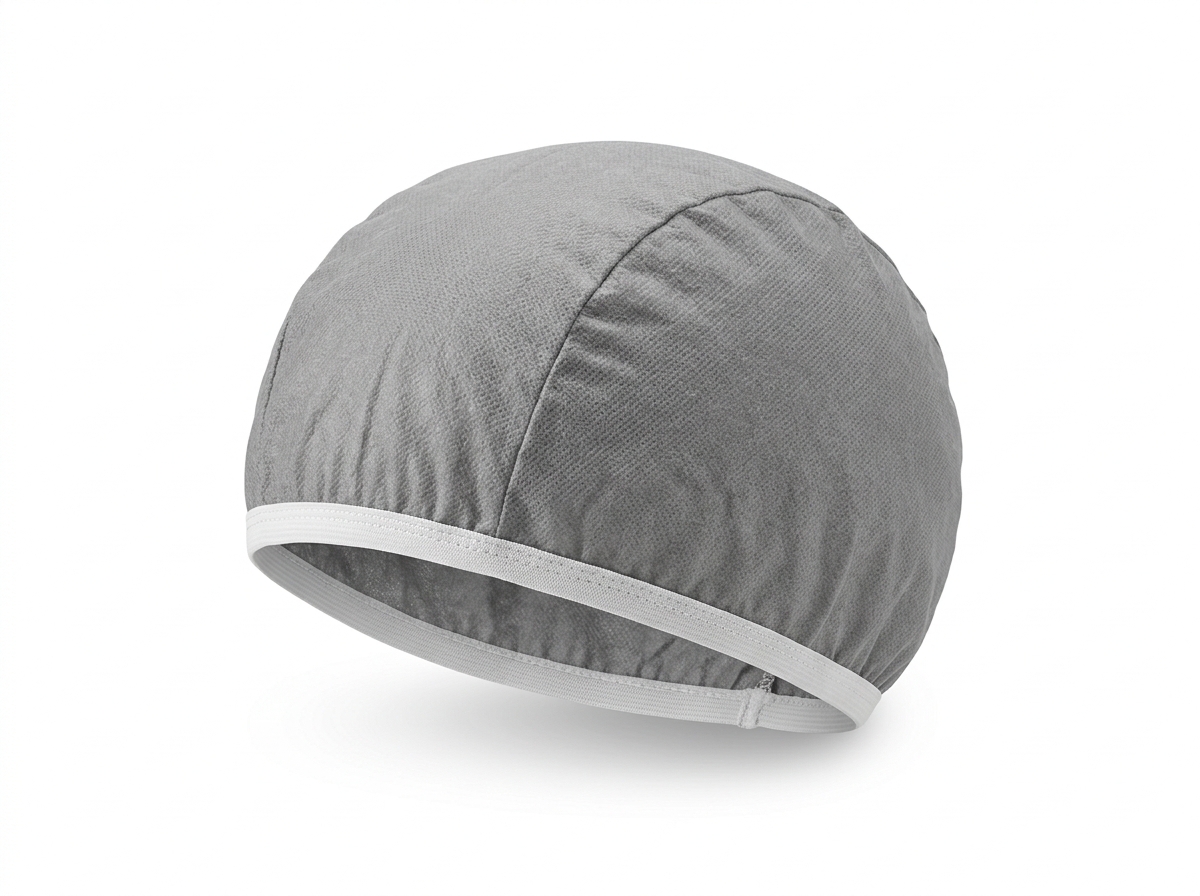
A rinse-free shampoo cap is a plastic cap holding pre-measured shampoo and conditioner. You warm it as the package directs, put it on, massage through the hair for a few minutes, take it off and towel dry. No basin under the neck, no tipping the head back, no water running toward the ears.
That matters more than it sounds. Tipping someone’s head back to rinse hair is uncomfortable for anyone with weak neck muscles and unsafe for anyone with swallowing problems. Caps and the equivalent body washes are listed on our grooming and hygiene equipment page.
Keep whatever they can still do
Hand over the cloth for any part they can reach. Nursing assistant training scripts this out loud, in words like “I’ll give you a washcloth so you can wash between your legs.” Offering, rather than assuming, is the standard, and it is the difference between doing something with someone and doing it to them.
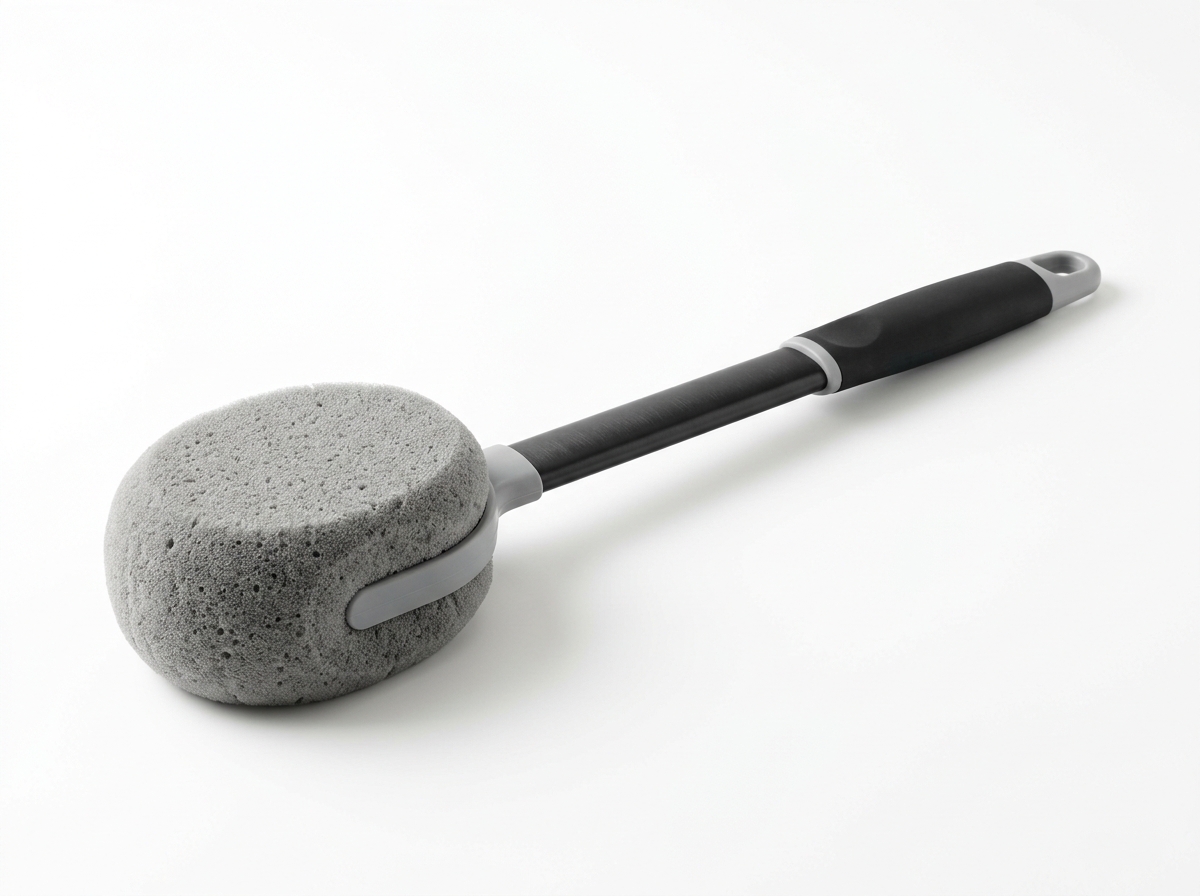
Reach usually goes before grip does. A long handle keeps the back and the feet in range for months after bending and twisting stop working, which is often the last piece of bathing a person keeps for themselves.
Reach aid
Vive Bendable Loofah on a Stick
A cheap way to hand someone back the parts of washing they can still manage alone.
- Brand
- Vive
- Handle
- 20 in, bendable
- Typical price band
- $8 to $15
- Best for
- Reaching the back and the feet without bending or twisting
Honest limitation: it extends reach, not grip and not strength. If they cannot hold and steer a 20 inch handle with a wet hand, this quietly becomes one more thing you are doing for them, and a dropped handle in a tub is a hazard of its own.
We earn a commission on this link. It does not change the price you pay, and it does not influence which equipment we cover.
If the bathroom is still reachable on some days
Bed baths and bathroom trips are not a one-way door. Plenty of families do a seated shower twice a week and bed baths the rest of the time. If that is where you are, a bench and a handheld head do most of the work: read our guides to using a shower transfer bench and to toilet transfers, and see the full bathroom safety equipment list.
Seated bathing
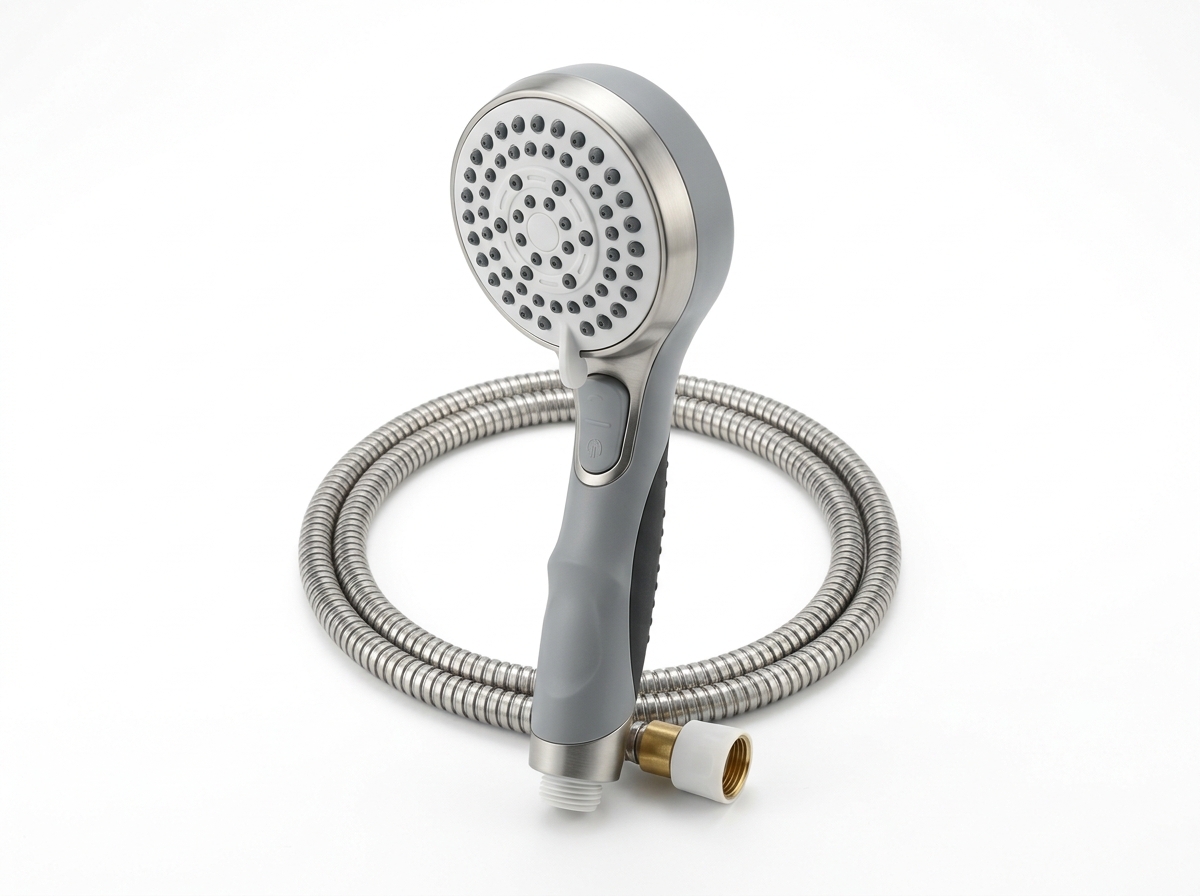
YOO.MEE ADA Handheld Shower Head
Brings the water to a seated person instead of asking them to stand under it.
- Brand
- YOO.MEE
- Features
- Hose, pause switch, oversized silicone grip
- Typical price band
- $20 to $40
- Fitting
- Threads onto a standard shower arm. Check your own arm and thread before ordering.
Honest limitation: it only helps if getting into the shower is still safe, and it does nothing at all for someone who cannot leave the bed. Weak hands may not hold it, which puts it back in your hand and leaves you washing one-handed.
We earn a commission on this link. It does not change the price you pay, and it does not influence which equipment we cover.
Perineal care, done plainly
Nursing assistant training tells students to keep a professional, matter-of-fact attitude through this part, specifically to reduce the person’s embarrassment. That advice transfers to families almost unchanged. Apologizing, going quiet, or making a joke of it all say the same thing, that something shameful is happening. Working steadily and saying what comes next says it is just a wash.
The technique is short. Gloves on. Uncover the perineum and nothing else. Front to back, one direction, a clean part of the cloth for every stroke. Buttocks and the anal area last. Rinse, pat dry, then a barrier product if the care plan calls for one.
After an incontinence episode, MedlinePlus says to clean the area right away and dry it well. Protocols for incontinence-associated dermatitis published in the Indian Journal of Critical Care Medicine describe the same three parts: gentle cleansing, moisturizing, and a skin protectant. Skin that sits wet is skin that breaks, which is also why this page pairs with bed positioning and pressure care.
Shaving, teeth and nails
Shaving. Use an electric shaver if the person takes a blood thinner or has a low platelet count. MedlinePlus tells people on warfarin to use a soft toothbrush, waxed floss and an electric razor, and the National Cancer Institute, the US government’s cancer research agency, gives the same advice for bleeding risk. Hold the skin taut and the shaver at a right angle to the face.
Ask before you change anything. Someone who has wet shaved for fifty years may want to keep doing it, and a beard is a decision they get to make, not a maintenance problem you get to solve.
Teeth. The National Institute of Dental and Craniofacial Research, the dental research institute of the US National Institutes of Health, says to brush twice a day with fluoride toothpaste, angling the bristles toward the gumline and using small circular motions. Raise the head of the bed first if the care plan allows it, and go carefully at the tongue so you do not cause gagging.
If they cannot reliably spit, stop and ask the dental or speech therapy team how to do mouth care safely. That is a swallowing question, and it has a real answer that depends on the person.
Nails. File rather than clip wherever filing will do, working from the outside of the nail toward the middle. Trim toenails straight across and never into the corners. If the person has diabetes, hand nail care to a nurse or podiatrist. Nursing assistants are not permitted to do it, and that restriction exists for a reason.
When this stops working
Watch for the point where a bed bath needs two people to do safely, where rolling them to reach the back has become the hardest part of your day, or where you are skipping washes because of what they cost you both.
That is the moment to ask the care team about home health aide visits for bathing. Families routinely wait months past that point, usually because nobody told them it was on the table.
Common questions
How often does someone need a full bed bath?
Less often than you would think. MedlinePlus advises against washing the whole body every day, because it dries skin that is already fragile. Many families do a full wash on some days and a partial wash, meaning face, underarms, hands and perineal area, on the others. Perineal care after every incontinence episode is the exception, and that one is not optional.
How hot should the water be?
Home health aide training texts cap bed bath water at 105 degrees Fahrenheit. Test it on the inside of your wrist, then let the person feel a wet cloth on the back of their hand before you start. For feet, the National Institute of Diabetes and Digestive and Kidney Diseases puts 90 to 95 degrees Fahrenheit in the safe range and suggests a thermometer or your elbow.
Are no-rinse wipes actually as good as soap and water?
For getting someone clean, the evidence says yes. A 2019 study in the American Journal of Infection Control found a disposable bath reduced skin bacteria and maintained the moisture in the outer skin layer, and earlier work in the American Journal of Critical Care found no difference in microbial counts against a basin bath. They also take less time.
How do I do this without it feeling humiliating for both of us?
Narrate before you touch. Keep everything covered except the part you are washing. Offer choices you will actually honor, including which parts they wash themselves and who does the rest. A 2023 review in the journal Nursing Inquiry found that body care turns into task work, and a person into a set of parts, when those things go missing. They are the technique, not the manners.