
Skin and pressure care
How to Prevent Pressure Sores in Bed
A pressure sore forms when body weight sits on a bony point and squeezes the blood supply shut. You prevent it by changing the loaded points, keeping the heels off the mattress, and checking the skin at every turn. The earliest sign is redness that does not fade when you press it. Anyone who cannot shift their own weight is at risk, from stroke to spinal cord injury and ALS.
Show guidance for someone who
Before you start
- You know the turning interval the nurse or therapist set for this person, and it is written where the whole household can see it
- Two or three pillows and any wedges are within reach before you begin
- The bottom sheet is dry, and any wet pad has already been changed
- The room light is good enough to see a color change on their skin
- Catheter, feeding, and oxygen tubing have enough slack to travel with them
- You know which side they were on last time
The procedure
Lower the head of the bed as flat as they can tolerate
Bring the head section down before you move anything else, unless the care team has told you their head has to stay raised for breathing, feeding, or reflux.
MedlinePlus, the patient information service of the US National Library of Medicine, says not to raise the head of the bed past thirty degrees, because being flatter keeps the body from sliding down.
Roll them onto a thirty degree tilt, not onto the hip
Roll them toward you until the shoulder and hip lift clear of the mattress by a few inches, and stop there. Our guide to rolling and sitting up at the edge of the bed covers the roll itself.
The Merck Manual, a US clinical reference written by physicians, describes placing the person at a thirty degree angle on their side to keep weight off the point of the hip. Rolling them all the way over swaps one bony point for a worse one.
Look at every bony point that was taking the weight
With their back exposed, check the tailbone, both hips, both shoulder blades, both elbows, the back of the head, and the tops of the ears.
Those are the sites MedlinePlus lists, and the ears and the back of the head are the two people forget. A pillow seam or an oxygen tubing strap sits on an ear for hours without anyone noticing.
Press any red patch with one fingertip
Press for a second or two, lift your finger, and watch. Skin that goes pale under your finger and then colors back in is doing what healthy skin does. Skin that stays the same color is not.
A stage one pressure injury is defined as intact skin with redness that does not blanch when pressed. That is the whole test, and it is the difference between a mark that will fade and damage that has already started.
Slide a wedge behind their back to hold the tilt
Push a foam wedge or a firmly rolled pillow down the length of their back, from shoulder blade to the top of the buttock, so the tilt holds without them leaning on it.
A pillow shoved under one shoulder props them at an angle and leaves the hip carrying everything. A wedge along the whole back spreads the load, which is the point of the exercise.
Put a pillow between the knees and the ankles
Separate the legs with padding that runs from just above the knees to past the ankles, so no bone rests on another bone.
MedlinePlus asks for padding between the knees and ankles for exactly this. A short pillow that stops at the knee leaves the inner ankle bones grinding together all night.
Lift the heels clear with a pillow under the calves
Run a pillow lengthwise under both calves so the heels hang in the air with nothing touching them, and leave a slight bend at the knee.
The Merck Manual names the sacrum as the most common site and the heels as the next one. MedlinePlus gives the calf pillow as the way to lift the heels up. Padding a heel is not the same as taking the weight off it.
Smooth every wrinkle out from under them
Run your flat hand under their back and hips and pull the bottom sheet taut, and check that no clothing seam, catheter line, or tubing is trapped underneath.
MedlinePlus asks for sheets and clothing to be dry and smooth with no wrinkles. A folded sheet under a hip concentrates the whole load onto one ridge of fabric.
Write down the time and the side
Note the clock time and which way they are facing on a sheet of paper by the bed, along with anything you saw on the skin.
The Merck Manual asks for a written schedule to direct and document repositioning. At three in the morning nobody remembers which side they were on last, and that is how one hip ends up taking eight hours.
Use caution
- Never rub or massage a red patch over a bony point. You are pressing on tissue that is already short of blood.
- Dragging someone up the bed shears the skin against the tissue underneath. Use a slide sheet, as in our guide to moving someone up in bed.
- A soft heel boot cushions the heel. It does not take the weight off it. Only lifting the calf does that.
- Do not use a ring or donut cushion under the tailbone. It loads a circle of tissue in order to spare the middle.
- This page does not replace hands on teaching. Ask the nurse or therapist on the case to watch you turn them once.
Stop and get help
- A red, purple, or blue patch over a bony point that does not change color when you press it
- Skin that is broken, blistered, or weeping anywhere over the tailbone, hips, or heels
- A patch that feels warm, spongy, hard, or boggy compared with the skin next to it
- A dark or maroon area under intact skin, which can be deep damage showing through
- Any smell, any drainage, or a fever alongside a skin change
Print the nine-step checklistOne page, large type, tape it to the wall by the bed.
Where pressure sores actually form
They form where bone sits close to the surface. MedlinePlus lists the heels and ankles, knees, hips, spine, tailbone, elbows, shoulders and shoulder blades, the back of the head, and the ears. The Merck Manual names the sacrum as the most common location, with the heels next.
None of that is specific to one diagnosis. It applies to anyone who has stopped shifting their own weight, whether that is after a stroke, with multiple sclerosis or Parkinson’s, after a spinal cord injury, or through frailty and age.
Which of those matters depends on the position. Lying on the back loads the tailbone, the shoulder blades, and the heels. Lying on one side loads the hip, the outer ankle, and the ear. Sitting up loads the sitting bones. Every position has its own list, which is why changing position works at all.
The heel is the one people miss
The heel is second only to the tailbone, and it is also the site most likely to be under a blanket, at the far end of the bed, behind the person you are looking at. There is very little tissue between that bone and the sheet. Nothing you put on a heel changes the fact that it is bearing weight, so lift it instead.
Both MedlinePlus and the Merck Manual describe the same fix: a pillow running under the calves so the heels hang free. Keep a slight bend at the knee, and check that the pillow has not been kicked out an hour later.
How often to reposition
You will see two hours quoted everywhere. Cleveland Clinic, a large US hospital system, says every one to two hours in bed and every fifteen minutes when seated. MedlinePlus says every one to two hours. The Merck Manual says a minimum of every two hours. Britain’s National Health Service gives no number at all and says only to change position regularly.
The reason the numbers disagree is that the evidence does not settle it. Cochrane, an international nonprofit that pools the results of medical trials, reviewed repositioning for pressure ulcer prevention and reported no clear evidence that any particular frequency works better than any other. Every two hours against every four, or every two against every three, all came out unclear.
So treat two hours as a starting point somebody else has to confirm, not a rule. The interval that applies to this person comes from the nurse or therapist who has looked at their skin, their weight, their circulation, and how much they can shift themselves. Ask for it directly, write it on the same sheet you log the turns on, and ask again if the skin starts marking.
The standard definitions everyone works from come from one document. The National Pressure Injury Advisory Panel, a US nonprofit that sets those definitions, writes it jointly with the European Pressure Ulcer Advisory Panel and the Pan Pacific Pressure Injury Alliance. Its third edition came out in November 2019 and a fourth edition has since replaced it.
Why a raised head of bed causes damage
Sitting someone up in bed feels kinder than lying them flat, and for breathing or eating it often is. It also creates shear. The Merck Manual explains it plainly: the muscle and tissue under the skin are pulled down by gravity while the top layer of skin stays stuck to the sheet. The two layers slide apart, and the small blood vessels running between them tear.
That is why MedlinePlus caps the head of the bed at thirty degrees. It is also why someone who keeps sliding down the bed keeps marking up over the tailbone. If the head section has to stay high for a medical reason, say so to the care team and ask what else can be done, because the shear does not go away on its own.
Choosing a surface
Support surfaces split into two families. Static ones, foam and gel overlays, need no power and work by spreading the load over more area. Dynamic ones, alternating pressure air surfaces, run off a pump and change which cells are inflated on a cycle, so the loaded points keep moving even when nobody is in the room.
Cochrane compared them. Alternating pressure air surfaces may reduce the risk of a pressure ulcer developing compared with foam, and are probably more cost effective, though Cochrane rated its own certainty as low. Foam may increase the risk compared with air surfaces. None of it is settled evidence, and none of it replaces turning.
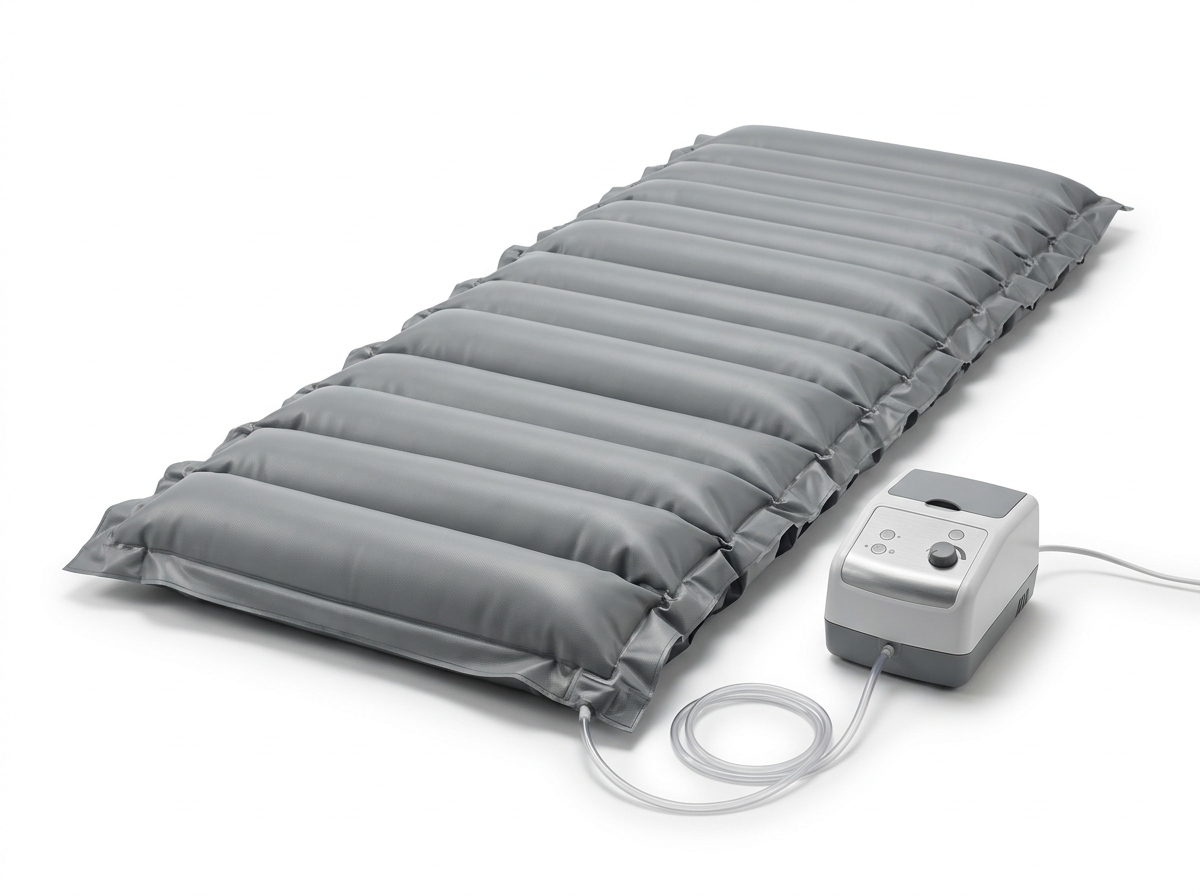
Dynamic surface
Vive Alternating Air Pressure Mattress Pad
The usual first powered surface for someone who is now spending most of the day in bed.
- Weight capacity
- 300 lb
- How it works
- Air cells inflate and deflate on a cycle driven by a bedside pump
- Power
- Needs a wall outlet and stays running, so it stops working in a power cut
- Goes on top of
- Your existing mattress, as an overlay rather than a replacement
- Typical price band
- $70 to $150
Honest limitation: the pump runs all night and some households find the noise and the movement enough to disturb sleep. It also does not replace turning, and Cochrane rated the evidence behind air surfaces as low certainty. Confirm the capacity printed on your own unit covers the person’s weight.
We earn a commission on this link. It does not change the price you pay, and it does not influence which equipment we cover.
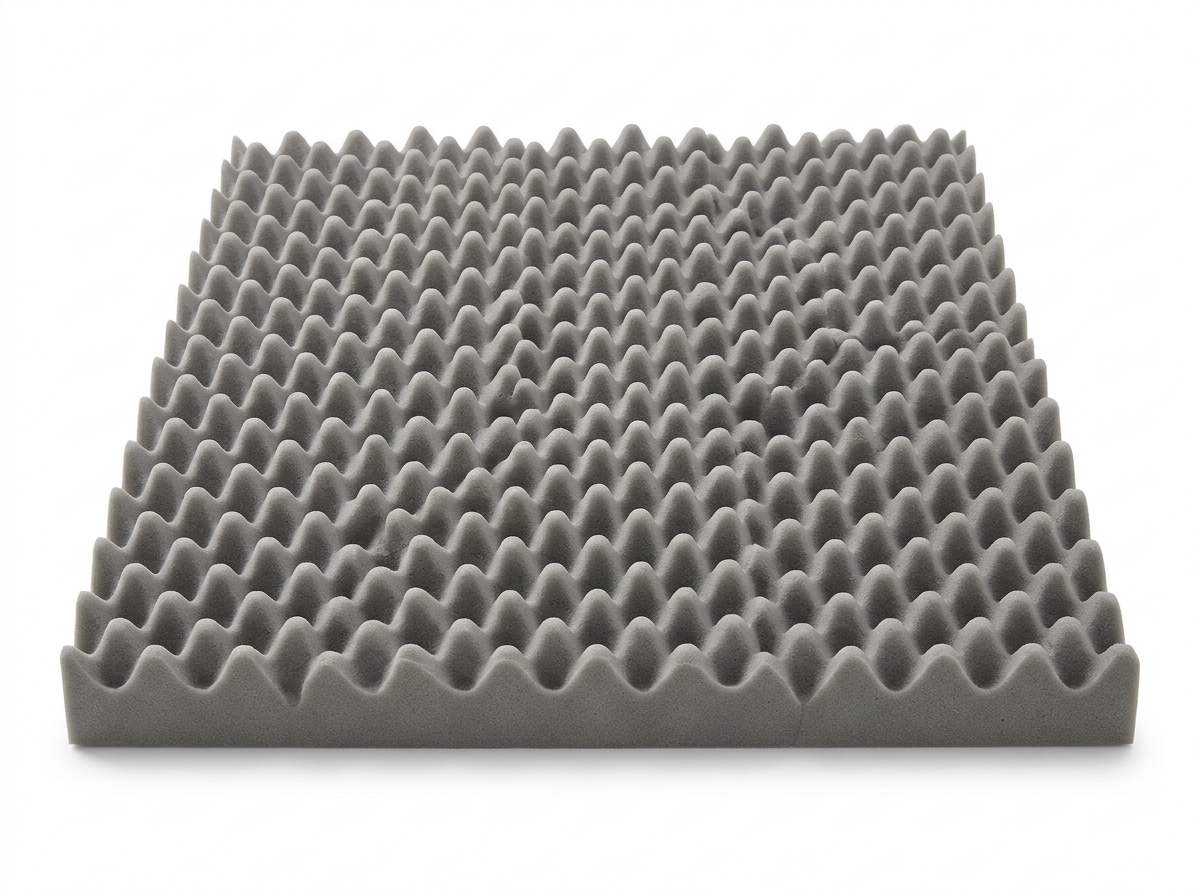
Static surface
DMI 3-Inch Egg Crate Foam Mattress Topper
Where most families start, because it is cheap, silent, and needs nothing plugged in.
- Size
- 33 in by 72 in by 3 in, twin, which is the standard hospital bed footprint
- Power
- None. Nothing to plug in and nothing to fail
- How it works
- Spreads the load over more surface area rather than moving it around
- Typical price band
- $30 to $70
Honest limitation: Cochrane found that foam surfaces may actually increase pressure ulcer risk compared with air-filled surfaces. Foam also bottoms out over time and gives no warning when it does. Measure the bed before ordering, because a twin overlay will not cover a full or queen mattress.
We earn a commission on this link. It does not change the price you pay, and it does not influence which equipment we cover.
Heel boots are the third thing families buy, and they are the one most often misunderstood. They pad the heel and they cut friction against the sheet. They do not lift the heel off the bed, so they belong alongside the calf pillow rather than instead of it.
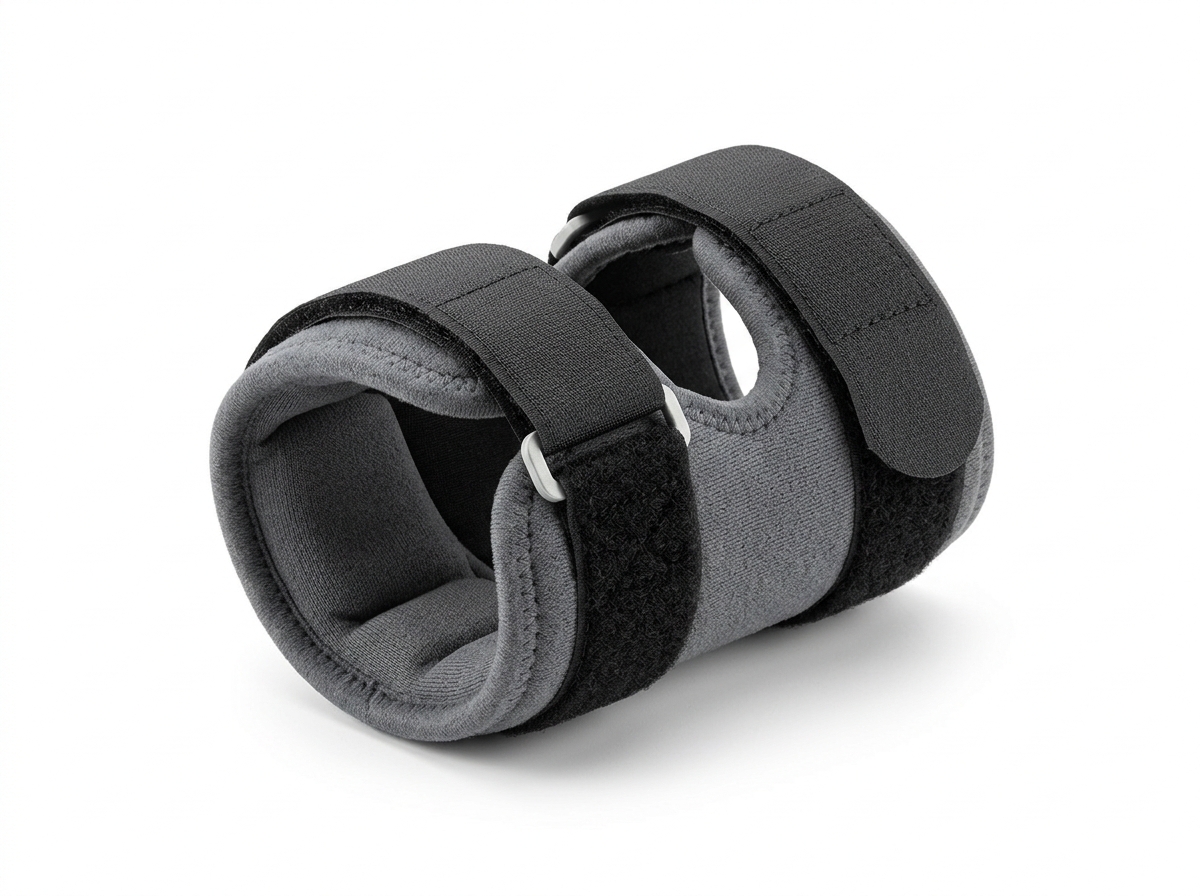
Offloading
NYOrtho Heel Protector Boots, pair
For heels that are already marking, and for anyone whose feet rub against the sheet all night.
- Sold as
- Two boots, one pair
- Construction
- Two layer, water resistant peachskin fabric per the listing
- Sizing
- Check the size range on your own listing against their foot and calf before ordering
- Typical price band
- $15 to $30
Honest limitation: a soft boot cushions the heel, it does not offload it. The bone is still bearing weight. Straps and fasteners also wear out and stiffen after washing, so check the seams and the closures before every use, and stop using a boot with a frayed strap.
We earn a commission on this link. It does not change the price you pay, and it does not influence which equipment we cover.
The wedges, cushions, and overlays we have looked at are gathered in the bed and pressure care catalog, including seat cushions for the hours spent in a wheelchair, which load a completely different set of bones.
Moisture is a separate problem from pressure
Wet skin breaks down on its own, without any pressure involved. The Merck Manual lists excess moisture from perspiration and incontinence as its own contributor to skin breakdown, alongside pressure, shear, and friction. Skin that has been damp for hours is softened and fragile before any weight is put on it.
That means you are managing two things, not one. The Merck Manual says the skin must be kept clean and dry because moisture increases the risk. Cleveland Clinic advises barrier creams to protect skin from sweat, urine, and stool, and MedlinePlus asks for moisturizing cream and skin protectants daily.
In practice: change a wet pad the moment you find it rather than at the next scheduled turn, wash with plain water or a gentle cleanser instead of scrubbing, pat dry rather than rubbing, and put a barrier product on any skin that keeps getting wet.
Redness in the groin and between the buttocks is often moisture damage rather than pressure. The two are treated differently, so describe exactly where the redness sits when you report it.
Food and fluid
Skin is built out of what someone eats. MedlinePlus asks for enough calories and protein to stay healthy and plenty of water every day. Cleveland Clinic advises a nutritious, well hydrated, high protein diet. The Merck Manual’s professional edition puts protein for wound healing at 1.25 to 1.5 grams per kilogram of body weight per day.
Treat that last figure as a clinician’s number, not yours. It has to be set against kidney function, swallowing, and whatever else is going on, so ask the dietitian or the nurse what the target is for this person. Our page on eating and drinking well covers the practical side.
Weight loss matters here in its own right. Losing padding over the tailbone and the hips means the same two hours of lying down does more damage than it did a month ago. In conditions where swallowing gets harder, including ALS, intake and skin risk move together, and the care team should be hearing about both.
When this stops working
If a mark keeps coming back in the same place despite turning on schedule, the surface is not doing enough and the answer is a review, not a shorter interval. Ask for a wound care nurse or the therapist on the case to assess the bed, the cushion, and the sitting time together.
If one caregiver is doing every turn through the night, that is the thing that fails first. A powered surface buys time between turns but does not remove them. A hospital bed that raises to your working height, a slide sheet, and a second pair of hands at the hardest times are all worth asking the care team to help arrange.
Common questions
How often should I turn someone to prevent bed sores?
There is no single interval that fits everybody. You will see every two hours quoted by MedlinePlus, Cleveland Clinic, and the Merck Manual, while Britain’s National Health Service gives no number at all. Cochrane reviewed the trials and found no clear evidence that any one frequency beats another. Ask the nurse or therapist who has seen this person’s skin what interval they want, and write it down.
What does a stage one pressure sore look like on dark skin?
Color change is harder to see. Cleveland Clinic notes that stage one may be hard to spot on darker skin, and the Merck Manual says there may be no visible color change at all. Britain’s National Health Service describes the patch as purple or blue on black or brown skin rather than red.
Go by touch as well: a spot that feels warm, cool, spongy, or hard compared with the skin beside it counts, whatever color it is.
Do I need an alternating pressure mattress, or is a foam topper enough?
Cochrane found that alternating pressure air surfaces may reduce risk compared with foam and are probably more cost effective, but rated the certainty low. Foam is silent, cheap, and needs no power, which is worth something. If marks keep appearing on a foam overlay, that is the signal to move up. Ask the care team first, since a documented need is usually what gets a surface covered by insurance.
Is a red mark from incontinence the same as a pressure sore?
Often not. Damage from urine or stool tends to sit in the skin folds, the groin, and between the buttocks rather than directly over a bone, and it comes from moisture rather than weight. The Merck Manual lists moisture as its own contributor to skin breakdown. The two are managed differently, so describe exactly where the redness is when you report it.