
Walking aids
How to Transfer Safely With a Rolling Walker
A rolling walker transfer is how you help someone stand from a chair, bed, or toilet and sit back down. Lock the walker in front of the seat, bring them to the front edge with feet flat, and steady them at a gait belt as they push up. They must never pull up on the walker, because it tips. Only for someone who can take weight through their legs.
Show guidance for someone who
Demonstration of a sit-to-stand transfer onto a rolling walker, and the same movement in reverse to sit back down. Captions and full transcript below.
Before you start
- The floor around the seat and the route ahead are clear of rugs, cords, and furniture
- The walker brakes hold when you lean your weight on the frame
- The walker height is set so they can stand with a natural upright posture
- The gait belt is inspected for frayed fabric, worn stitching, or a damaged buckle
- You have checked how strong and steady they feel today, because it changes day to day
- You have explained what you are about to do and they have agreed to it
The procedure
Put the walker in front of the seat
Set the walker directly in front of the chair, bed, or toilet, close enough that they can reach it once they are upright.
Too far away and they will reach for it before they are steady. Too close and there is no room left to straighten up.
Lock the brakes
If the walker has wheel brakes, set both of them now and push on the frame to confirm they hold.
An unlocked rolling walker moves the instant a hand goes onto it. That is the moment most walker falls happen.
Bring them to the front edge of the seat
Have them scoot forward until they are sitting on the front edge, with both feet flat on the floor and slightly apart.
Those two flat feet are the base they will push off from. Feet tucked under the seat or crossed at the ankle take the base away.
Fit the gait belt over their clothing
Fasten the belt around their waist over clothing, snug but not tight, sitting where you can get a firm hold without pressing into them.
The belt is what you hold instead of an arm or a handful of shirt. Both of those tear, slip, or bruise at the worst possible second.
Ask them to lean forward, nose over toes
Have them tip forward at the hips until their nose is out over their toes, before anyone tries to rise.
This shifts their weight over their feet and makes standing far easier. Sitting bolt upright and pulling is what leaves them stuck halfway.
Have them push up from the seat, never from the walker
Tell them to press down through their hands on the armrests or the mattress and through both feet, keeping their hands on the seat surface until they are upright.
A rolling walker tips easily if it is pulled on, and it lands on top of the person who pulled it. Hands go onto the walker only after they are standing.
Steady them at the belt as they rise
Hold the gait belt and guide them up, keeping your own feet apart, your knees bent, and your back straight.
You are steadying, not lifting. A gait belt is not rated to take a person’s body weight, so if their legs cannot push them up, stop and use a stand assist or a lift instead.
To sit down, back them up until their calves touch the seat
Walk them back a small step at a time until the backs of both calves are touching the chair, bed, or toilet.
Calves against the surface is the only way they can feel where the seat is without turning to look, and turning to look is how people sit down on the edge and miss.
Lower with them as they reach behind
Ask them to let go of the walker and reach back for the armrests or the surface, then bend your own knees and go down with them while you support the belt.
Reaching back for the seat, not holding the walker on the way down. A walker held during the sit gets dragged forward and tips.
Once they are seated, check that they are comfortable and settled, take the gait belt off, and make sure they are stable before you walk away.
Use caution
- Move slowly and keep talking through each part. Rushing is how mistakes and falls happen.
- Bend your knees and keep your back straight. Never take a load through your back.
- If they tell you something hurts, stop where you are and reassess before you go on.
- If their balance or their weight is more than you can steady alone, get a second person. Do not try it solo to save time.
- Follow the manual for your own walker model. Brake types and height ranges differ between models.
- This page is not a substitute for hands-on practice with a physical or occupational therapist. Ask them to watch you do it once.
Stop and get help
- Their legs buckle, or they cannot push up from the seat with their own arms and legs
- They can only get up by pulling themselves forward on the walker
- You find yourself taking their weight through the gait belt instead of steadying it
- The walker rocks, tips, or the brakes will not hold when you lean on the frame
- Pain that does not settle when you reposition them
Print the nine-step checklistOne page, large type, tape it to the wall by the bed.
Choosing a rolling walker for transfers
What matters for transfers is not the extras. It is whether the brakes hold under a real push, and whether the height can be set so they stand upright rather than stooped over the handles. Check both in the room where the transfer actually happens, with the same chair and the same shoes.
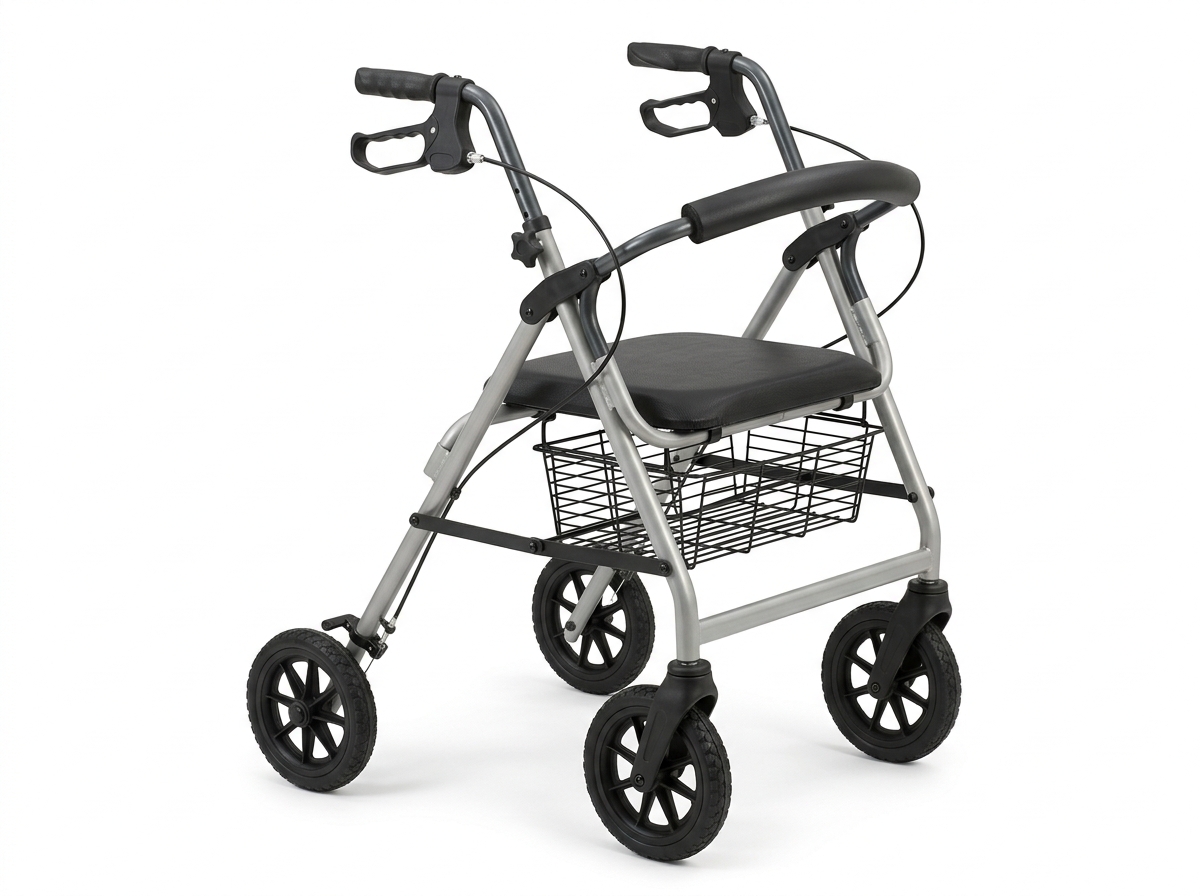
Walking aid
Rollator or rolling walker
For someone who can still walk and bear weight but needs support for balance once they are up.
- Brakes
- Hand brakes on a four-wheel rollator. Two-wheel walkers often have none. Lock them, or hold the frame, before any transfer.
- Height
- Adjustable. Set it so they stand upright, not stooped. Check the range on your own model.
- Weight capacity
- Check the label on your own unit. Ratings differ by model, and a built-in seat may carry its own separate rating.
- Doorways
- Measure your narrowest doorway and your tightest turn before you buy anything.
Honest limitation: a rolling walker gives no help at all during the moment of standing, which is the part of the transfer that fails. It only becomes useful once they are already upright, and it tips if it is used as a handhold to pull up on.
We earn a commission on this link. It does not change the price you pay, and it does not influence which equipment we cover.
When this stops working
This works while they can push up from the seat themselves. Once their legs buckle, once fatigue means the stand fails partway, or once you are taking their weight rather than steadying it, the walker and the belt are past their usefulness. Next is a stand assist like the Sara Stedy while they can still grip and bear some weight, then a full-body lift.
Common questions
Can they pull themselves up on the walker?
No. A rolling walker is not anchored to anything, and pulling on it tips it over onto the person pulling. They push up from the chair, the bed, or the armrests, and their hands go onto the walker only once they are standing.
Do I still need a gait belt if they use a walker?
Yes. The belt is what gives you a hold you can trust while they stand and while they sit, instead of grabbing an arm. Fitting matters, so read how to fit a gait belt before you use one.
When is a sit-to-stand transfer to a walker the right choice?
When they need to get up from a chair, bed, or toilet, can take some weight through their legs, and mainly need support for balance and steadiness once upright. If they cannot take weight, this is the wrong transfer.
What if they seem weaker today than yesterday?
Their strength and balance can vary day to day, so judge it before every transfer rather than assuming yesterday still applies. On a weak day, slow down, and bring in a second person rather than pushing through alone.