
Transfer aids
How to Use a Sara Stedy Safely
A Sara Stedy is a sit-to-stand transfer aid for short moves, bed to chair or chair to toilet. The person stands using the crossbar while you steady them, sits on the paddles, and you wheel them. It only works if they can bear some weight through their legs, hold the crossbar, and follow instructions. It is not a lift and will not carry someone who cannot do all three.
Show guidance for someone who
Demonstration of a full sit-to-stand transfer on a Sara Stedy, with a gait belt in place. Captions and full transcript below.
Before you start
- Today, they can take some weight through their legs, grip the crossbar, and follow what you ask
- Every part is inspected for wear or damage: frame, seat paddles, footplate, wheel locks
- The manual for your specific model has been read, since latches and paddles differ
- The floor path is clear of rugs, cords, and pets, and the destination seat is in place
- A gait belt is fitted around their waist over clothing
- You have explained each step and they know what to expect
The procedure
Bring the frame in front of them
Wheel the Sara Stedy up to them with the open side facing them and the seat paddles lifted out of the way. Get it as close as it will go.
Every inch of gap is distance they have to cover on their own legs. A frame parked a foot away turns an assisted stand into a step.
Lock the wheels
Set both wheel locks before any weight goes onto the frame, and look at them rather than feeling for them.
An unlocked frame rolls away from them at the exact moment they pull on the crossbar to stand.
Place their feet on the footplate
Guide both feet flat onto the footplate so they are firmly grounded before anything else happens.
Bring their hands to the crossbar
Help them take hold of the crossbar with both hands. They keep hold of it from here until they are seated at the other end.
The crossbar is where their own effort goes in. If they cannot hold it, the transfer is not a Sara Stedy transfer, and you need a different device.
Guide them up to standing
Stand close, ask them to lean forward over their feet, and use the gait belt to steady and guide them as they push up. Let their legs do the work.
Leaning forward first is what puts their weight over their feet. Standing them straight up from a lean-back is why caregivers end up taking the load through their own back.
Seat them on the paddles
With them standing, lower the seat paddles into place behind them, then let them sit back onto the paddles slowly.
Wheel them to the target seat
Release the locks and move slowly to the chair, bed, or toilet, getting the frame as close to the seat as it will go. They hold the crossbar the whole way and stay in your view.
Lock the wheels again
Set both locks at the destination before you stand them a second time.
This is the step that gets skipped, because you locked the wheels once already and the trip felt short.
Stand them, then lower them onto the seat
Bring them back to standing with the gait belt, flip the seat paddles up and out of the way, then lower them slowly onto the seat and adjust their posture until they are comfortable.
Use caution
- Their strength varies day to day. Check what they can do today, not what they could do last week.
- Do not rush. Forceful or sudden movements frighten people, and a startled person pulls against you.
- Never leave them alone in the device, and keep them in your view for the whole transfer.
- The device reduces strain on you. That is a real benefit and it is not a reason to attempt a transfer they can no longer take part in.
- Inspect it before every single use, including the wheel locks. Follow the manual for your model.
- Read this alongside hands-on training from a physical or occupational therapist, never instead of it.
Stop and get help
- Their knees buckle, or they cannot take any weight through their legs
- They cannot hold the crossbar, or they let go partway through
- They cannot follow or hold on to the instructions during the transfer
- They tell you something hurts or pinches and repositioning does not fix it
- Any part is cracked, bent, or worn, or a wheel lock will not hold
- You find yourself lifting their body weight rather than steadying them
Print the nine-step checklistOne page, large type, tape it to the wall by the bed.
Where a Sara Stedy fits, and where it does not
A Sara Stedy sits between a gait belt and a full-body lift. It is not a lift. A Hoyer style lift takes a person’s whole weight in a sling, so it works whether or not they can help. A Sara Stedy only supports a stand they are already making, which is why the three prerequisites matter more than any other detail on this page.
It is at its best for short distances: bed to chair, chair to toilet, one side of a room to the other. It also helps with bathroom and hygiene tasks, where it keeps someone steady in a slippery space without stripping their privacy. Ask a physical or occupational therapist to confirm it suits the person before you buy or rent one.
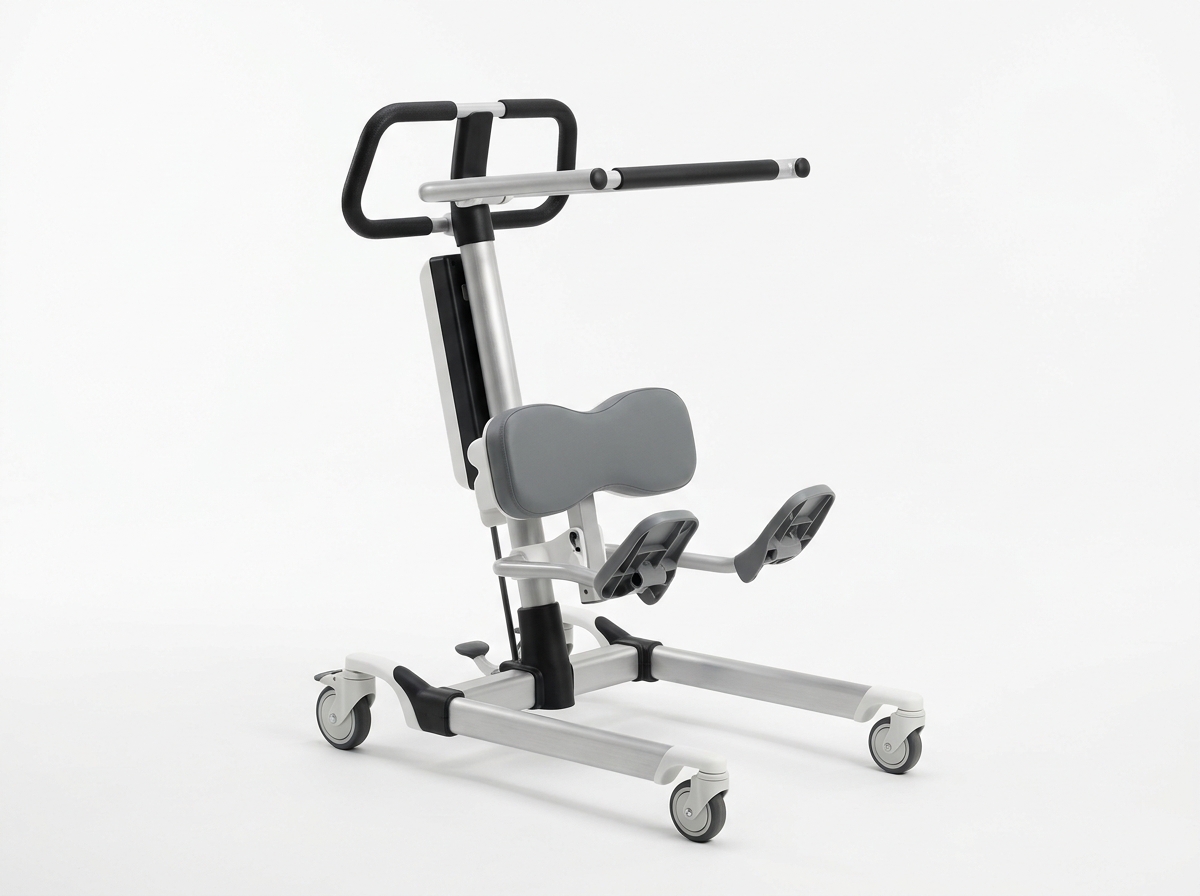
Sit to stand
Sara Stedy sit-to-stand transfer aid
A non-powered frame for short transfers by someone who can still stand with help.
- The person must be able to
- Bear some weight through their legs, hold the crossbar, and follow instructions
- Best for
- Short transfers: bed to chair, chair to toilet, moves inside one room
- Weight capacity
- Varies by model. Check the rating labeled on your own unit and in its manual, and do not assume it matches another unit you have used.
- Fit in your home
- Measure your doorways and the turning space beside the bed and the toilet before you commit
- Caregiver effort
- Lower than a manual transfer, because the person’s own legs do the standing
Honest limitation: the window this device fits into can close quickly. The day someone can no longer push up through their legs or keep hold of the crossbar, the Sara Stedy stops being usable at all, and families often find that out mid-transfer with the person half standing.
We earn a commission on this link. It does not change the price you pay, and it does not influence which equipment we cover.
When this stops working
Once any one of the three prerequisites is gone, weight bearing, grip, or following instructions, the Sara Stedy is the wrong device and no amount of technique changes that. The next step is a full-body lift with a sling, which does not ask the person to help at all. Read how to use a Hoyer lift safely before that day arrives, and ask the therapy team to order one early.
Common questions
Is a Sara Stedy the same thing as a Hoyer lift?
No. A Hoyer lift takes a person’s entire weight in a sling and works even when they cannot help. A Sara Stedy is a frame that supports a stand the person makes themselves. Swapping one for the other is not safe in either direction.
Who is a Sara Stedy right for?
Someone who can bear at least some weight through their legs, hold the crossbar with both hands, and follow your instructions during the move. All three, on the day of the transfer. Have a physical or occupational therapist confirm it before you rely on it.
Do I still need a gait belt?
Yes. The belt is how you steady and guide them into standing at both ends of the transfer. It is for guiding only and never for lifting body weight. See how to fit and use a gait belt.
Can I leave them sitting on the paddles for a moment?
No. Keep them in view and stay with them for the whole transfer. The seat paddles are for the short move only, not a chair to wait in.