
Bed mobility
How to Move and Reposition Someone in Bed Safely
Bed mobility means rolling someone, changing their position, and bringing them from lying down to sitting on the edge of the bed. The sequence is raise the bed, bend their knees, roll them onto their side, then bring the shoulders up as the legs come over. Support at the shoulder and under the knees, and move slowly. If you are taking their full weight, get help.
Show guidance for someone who
Demonstration of rolling to side-lying and coming up to sitting on the edge of the bed. Captions and full transcript below.
Before you start
- Bed brakes are locked and the bed is at a height that lets you keep your back straight
- Blankets and sheets are folded back and clear of their legs
- The floor beside the bed is dry and clear of rugs, cords, and clutter
- Their non-slip socks or shoes are within reach
- You are wearing shoes with grip and clothing you can move freely in
- You have asked how they are feeling today, because strength and stiffness change day to day
The procedure
Tell them the plan and wait
Say out loud what you are about to do, in the order you will do it, and wait until they say they are ready.
Someone who knows the roll is coming helps you into it. Someone startled mid-roll stiffens or grabs the rail, and that is when shoulders get hurt.
Raise the bed to your hip height
If the bed adjusts, raise it until the mattress sits around your hip level.
Raising the bed removes the bending, and bending over a low bed is how most caregivers injure their back. Adjust the bed instead of adjusting your spine.
Lay them flat on their back
Settle them on their back, centered on the mattress, with the covers folded away from their legs.
Bend their knees up, feet flat
Ask them to bend their knees and put their feet flat on the mattress. If they cannot, bend the knees up for them one leg at a time.
Bent knees turn the roll into something the body does with you. With the legs left flat you end up dragging a straight, heavy load sideways.
Roll them onto their side
Put one hand at the shoulder and the other at the hip, and roll them toward you in one slow, even movement.
Shoulder and hip together keeps the trunk in one line. Pulling on an arm to start the roll is what strains a shoulder that no longer has the muscle to protect it.
Bring them up to sitting
Support under the shoulder and under the knees, then bring the upper body up as the legs come down over the edge of the bed. Ask them to push against the mattress with their arms if they can.
Side-lying first is what makes this possible. From flat on the back you would be lifting a full torso straight up, which is not a one-person job and not a back-safe one.
Steady them before you let go
Keep a hand on their back and give them a moment to sit, and ask whether they feel dizzy or unsteady before you release your support.
Blood pressure takes a few seconds to catch up with the change in position. Letting go on the assumption that sitting means stable is how people go over sideways.
Lower the bed and set their feet flat
Lower the bed until both feet rest flat on the floor, then adjust their sitting posture so they are upright and comfortable.
Use caution
- Look at the skin every time you reposition. Check the tailbone, hips, heels, elbows, and shoulder blades for redness that does not fade once the pressure is off.
- Repositioning lowers pressure injury risk. It does not remove it. Ask your nurse or therapist how often to turn, and follow that schedule rather than guessing.
- Smooth the sheet out under them after every move. A folded sheet or a rucked pad concentrates pressure in one spot.
- Bend at your knees, keep your back straight, and never lift with your back muscles.
- Move slowly. Force and sudden movement frighten people and can hurt them.
- Reading this is not the same as being taught. Ask a PT or OT to watch you do it once.
Stop and get help
- They tell you they hurt, and the pain does not settle when you pause
- They cannot hold themselves upright at the edge of the bed even with your hand on their back
- Dizziness at sitting does not pass, or they feel faint
- You find skin that is broken, blistered, or red and still red minutes later
- You cannot make the move without pulling on an arm or lifting with your back. Get a second person or a lift instead.
Print the eight-step checklistOne page, large type, tape it to the wall by the bed.
Choosing a repositioning aid
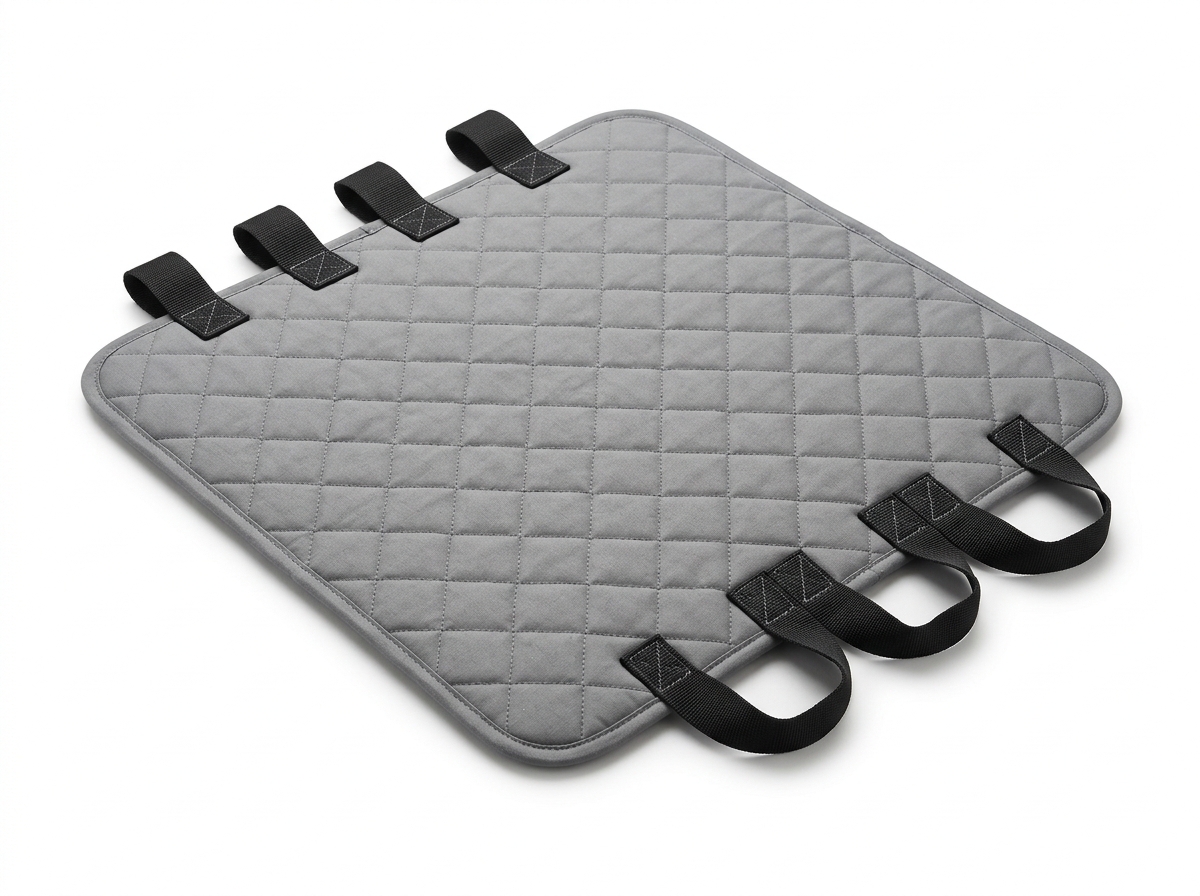
Nothing on this page needs equipment. The one piece that changes the work is a positioning pad, a reinforced sheet with webbing handles that lets you move someone by pulling on handles at your own hip level rather than reaching under them. It helps most with the roll and with sliding someone back up the bed.
Repositioning aid
Positioning pad with handles
A reinforced draw sheet that gives you handles, so rolling and boosting someone up the bed stops being a reach-and-lift.
- Weight capacity
- Varies by product. Check the label on your own pad, and replace it rather than testing the limit.
- Sizing
- Measure your mattress width. The pad should reach from the shoulders to mid-thigh.
- Handles
- Look for webbing handles along both long edges, so either caregiver can work from either side.
- Care
- Wash per the manufacturer’s instructions. Inspect the handles and stitching before every use and stop using it if either is pulling.
Honest limitation: the pad stays under the person, so it is one more layer that can wrinkle against skin and create a pressure point of its own. It also does nothing to help someone sit up, and it does not turn a two-person move into a one-person move.
We earn a commission on this link. It does not change the price you pay, and it does not influence which equipment we cover.
When this stops working
This works while the person can help a little and can hold themselves at the edge of the bed. Once the roll needs two people every time, or they slide sideways the moment you let go, or skin is marking up despite repositioning, the answer is equipment and not better technique. Look at height-adjustable beds and pressure relief on our bed and pressure care page, and at a full-body lift.
Common questions
How do I get them back to lying down?
Reverse it. Support them at the shoulder and under the knees, guide them down into side-lying rather than straight back onto their back, then roll them flat from there. Going down in one drop from sitting is how heads hit rails.
Can I do this by myself?
Often yes, if they can help with the roll and hold themselves at the edge of the bed. If their weight or their level of mobility means you are straining, get a second person. That is a judgment you make fresh each day, because ability varies day to day.
They get dizzy when they sit up. What do I do?
Stop where you are and keep supporting them. Let them sit still until it passes before you go any further, and never let go to see whether they are steady. If it happens often or does not pass, tell their care team.
Do I need a hospital bed for this?
No, but a bed whose height you can change is the single biggest thing that protects your back, and it makes every step above easier. It is worth asking the care team about before your back becomes the problem.