
Caregiver safety
Caregiver Body Mechanics and Back Injury Prevention
Protecting your back is mostly about how you set the move up, not how you lift. Raise the bed to your elbow height, bring the two surfaces together, get close before you take weight, and turn your feet instead of twisting.
Applying the revised NIOSH lifting equation to patient handling gives a 35 pound ceiling for one person, and only for someone cooperative. Above that you need equipment, not technique. NIOSH is the US federal institute for occupational safety and health, part of the CDC.
This page applies at every level. Jump to the technique for someone who
Before you start
- You know roughly what you will actually be lifting, and whether it is more than 35 pounds
- The bed or chair can be raised, or you have a low footstool to put one foot on
- The destination surface is alongside, brakes locked, armrest and footrests swung clear
- The floor path is clear of rugs, cords, and pets
- A physical or occupational therapist has watched you do this move at least once
- Any belt or sling you plan to use is checked for frayed webbing, pulled stitching, and a buckle that holds
The procedure
Decide where they will end up before you touch them
Fix the finish in your head first: which chair, which side, and how they will be sitting when it is over.
Amputee Coalition caregiver guidance opens with the same instruction: plan the move and know what you can and cannot do. Improvising halfway through, with their weight already on you, is where caregivers get hurt.
Raise the bed to your elbow height
Set the surface you are working over at your own elbows. If the bed does not adjust, put one foot up on a low stool instead.
OSHA’s nursing home guidelines state that the height of the bed should be appropriate for staff safety, at the elbows. This is the single biggest thing in the room you can change, and it is free.
Bring the destination alongside and lock it
Push the chair, wheelchair, or commode as close to the bed as it will go, lock the brakes, and move the armrest and footrests out of the way.
OSHA advises getting both transfer surfaces to the same level, at a height that lets you work at waist level, so you avoid extended reaches. Every inch of gap is a reach you pay for.
Tell them exactly what is about to happen
Say the whole move out loud in a sentence or two, then wait until they tell you they are ready.
Someone who knows the plan pushes with you. Someone startled in the middle of it pulls against you, and that sudden pull is the load your back was not braced for.
Set your feet shoulder width apart
Stand with your feet roughly eight to twelve inches apart, one foot half a step ahead of the other.
The staggered foot gives you somewhere to shift your weight to. Feet side by side and close together leaves you nothing to rock back onto if they wobble.
Step in close before you take any weight
Move in until there is no real gap between you and them, and stay there for the whole move.
OSHA’s own wording is to keep the person as close as possible to the caregiver during the transfer. Distance from your body is what turns a weight you could manage into one you cannot.
Bend at your hips and knees, not at your waist
Keep your back in its normal curve, arched normally rather than held stiff, with your weight balanced evenly on both feet.
Start the move on a spoken count of three
Count one, two, three out loud, and ask them to bend their knees and push on three.
OSHA’s repositioning guidance says to ask the person to flex their knees and push on the count of three. Their push is the only part of the move that costs your spine nothing.
Turn your feet, never your spine
Pivot by stepping around on your feet until your whole body faces the destination.
Twisting the torso while lifting sits on OSHA’s list of awkward postures linked to back injury. It is the one mistake that hurts people who otherwise did everything right.
Use caution
- Applying the revised NIOSH lifting equation to patient handling gives a 35 pound maximum for one person, and only when the person is cooperative and will not move suddenly. Above that, use equipment.
- OSHA recommends that manual lifting of residents be minimized in all cases and eliminated when feasible. That was written for nursing homes. It is the same back at home.
- Moving someone up in bed is not a one person task. OSHA is blunt about it: do not pull from the head of the bed.
- Two people lifting by hand is still a manual lift. It splits the load. It does not make the load safe.
- OSHA lists gait belts as unsuitable for people with recent abdominal or back surgery, or an abdominal aneurysm. Ask the care team before using one.
Stop and get help
- You are taking any part of their body weight through your arms, shoulders, or back
- You feel a twinge, a catch, or any new pain in your low back during or after a move
- You have numbness, tingling, or weakness running down a leg
- The move needs two people and you are about to do it alone anyway
- They cannot push up through their legs and you are still trying to stand them
Print the nine-step checklistOne page, large type, tape it to the wall by the bed.
Why “lift with your legs” is not enough
The advice is not wrong. It is just far too small for the job. NIOSH puts the recommended limit for an average worker lifting a stable box from the ground to waist height at 51 pounds. For lifting or transferring a person, the Academy of Pediatric Physical Therapy cites a 35 pound limit instead.
The difference between those two numbers is the person. A box does not shift, grab your arm, panic, or go rigid. Thomas Waters set out the 35 pound figure in the American Journal of Nursing in 2007, and it holds only when the person is cooperative and unlikely to move suddenly.
Then there is the harder finding. Writing in the American Nurses Association’s Online Journal of Issues in Nursing, Audrey Nelson and Andrea Baptiste concluded that thirty-five years of research show classes on body mechanics and training in lifting have consistently failed to reduce job-related injuries.
That does not make technique pointless. It means technique alone was never going to carry the weight. What the evidence supports is equipment, working height, and a second pair of hands.
Height is the biggest thing you control
In a 2000 interpretation letter, OSHA advised using height adjustable electric beds that raise to about the waist height of the worker, because that lets you lift and transfer someone with less forward flexion of the torso. Low or floor level mattresses force you to kneel, bend over the person, and move them mostly with your upper body.
OSHA’s nursing home guidelines set the target at the elbows, and repeat the rule for chairs and stretchers: get both surfaces level, at a height where you work at waist level, so you are not reaching out or bending your back.
If your bed does not raise, solve that before you buy anything else. It changes every transfer, every bed bath, and every reposition, for as long as you are caring.
Most caregiver back injuries are not one dramatic lift
Nelson and Baptiste report that most work-related injuries in nursing are cumulative in nature, and that the cumulative weight a nurse lifts across one typical eight hour shift is equivalent to 1.8 tons. Almost none of that is a single heroic lift.
OSHA lists repetition, meaning performing the same motion or series of motions continually or frequently, as a risk factor in its own right, alongside force and awkward posture. The pillow you straighten forty times a day is on that list.
This is why the injury usually arrives with no story attached. There was no moment. There were a thousand small moments, and then one ordinary morning your back does not work. Fixing the small repeated moves matters more than bracing for the big one.
Fix the ones you do most often first: sliding someone up the bed, straightening them in a chair, pulling a leg across. Our guide to moving someone up in bed covers the one OSHA singles out as not a job for one person.
A gait belt guides and steadies. It never lifts.
This rule runs through every transfer guide on this site, and it belongs here in full. A gait belt gives you a secure handhold at the waist so you can steady someone, slow them, and control a stumble. It is a handhold. It is not a harness, and it is not a lifting device.
OSHA says it plainly in its nursing home guidelines: belts should not be used for lifting residents, and the motion when using a belt is a rocking and pulling motion rather than lifting. The same entry tells you to keep the person as close as possible to you throughout.
So the test is simple. If they can push up through their legs and you are steadying, the belt is the right tool. If you are taking their weight, you are past what any belt does. Our guide to fitting and using a gait belt covers the technique.
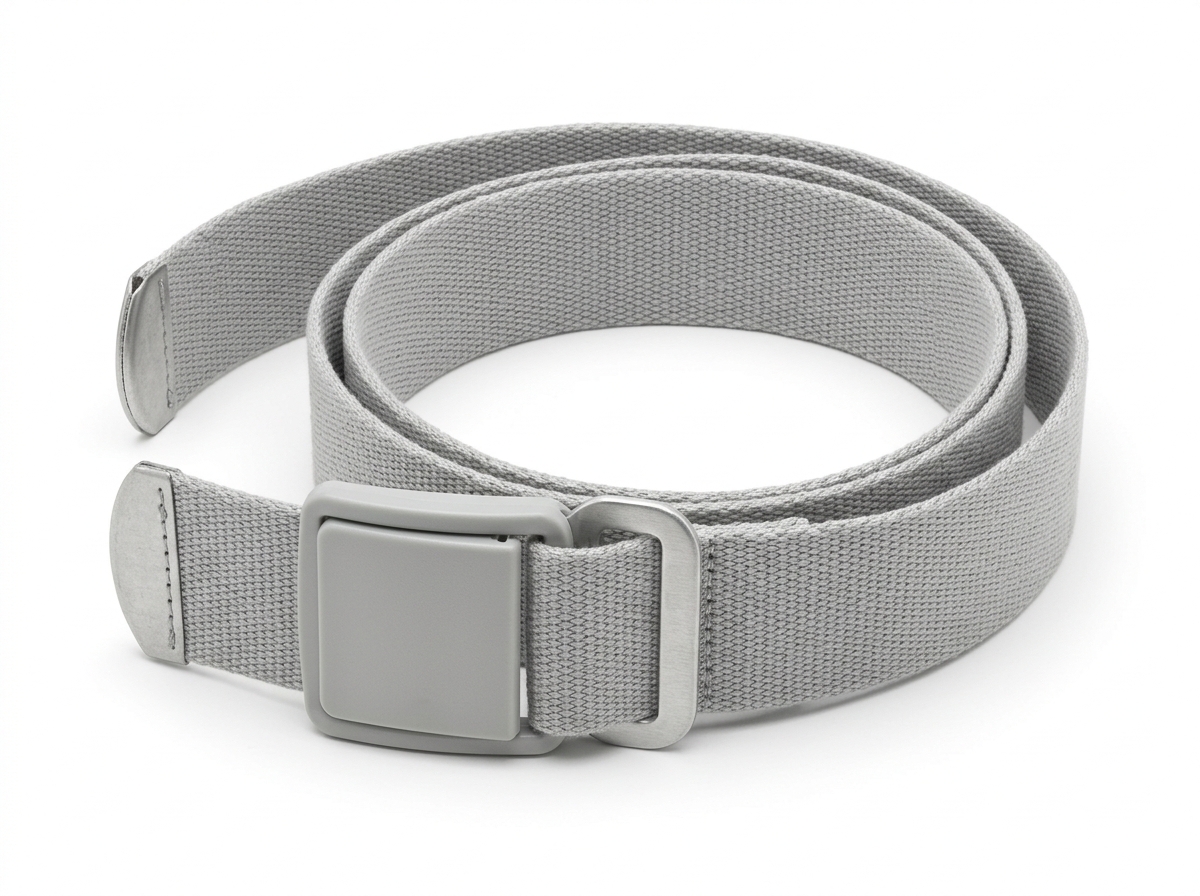
Steadying aid
Gait / transfer belt
The one piece of equipment that helps your back without asking your back to do more.
- What it does
- Gives you a handhold at the waist so you can steady, slow, and control a movement the person is powering themselves
- What it does not do
- Take body weight. OSHA states belts should not be used for lifting, and describes a rocking and pulling motion rather than lifting.
- Stated capacity
- 350 lbs for the Vive model linked below. Check the label on the belt you actually own, not this figure.
- Not suitable for
- OSHA lists recent abdominal or back surgery and abdominal aneurysm. Ask the care team first.
- Sizing
- By waist measurement taken over clothing. The belt never goes against bare skin.
Honest limitation: a belt does nothing at all for your back if you use it to take someone’s weight. It only helps while they can still push through their legs. Buying one does not make a transfer safe that was unsafe without it.
We earn a commission on this link. It does not change the price you pay, and it does not influence which equipment we cover.
How many people the task actually needs
OSHA’s nursing home guidelines carry decision algorithms developed by the Veterans Health Administration Patient Safety Center of Inquiry. They were written for paid staff, but the physics do not change when the move happens in a bedroom.
| Task | What the OSHA algorithm calls for |
|---|---|
| Lateral transfer, person under 100 lb | Lateral sliding aid and 2 caregivers |
| Lateral transfer, 100 to 200 lb | Lateral sliding aid or a friction reducing device, and 2 caregivers |
| Lateral transfer, over 200 lb | Lateral sliding aid and 3 caregivers, or a mechanical lateral transfer device |
| Moving up in bed, under 200 lb | Friction reducing device and 2 to 3 caregivers. Not a one person task. |
| Moving up in bed, over 200 lb | Friction reducing device and at least 3 caregivers |
| Stand and pivot, cooperative with arm strength | Gait belt and 1 caregiver, or a powered standing assist lift |
| Cannot bear weight | Full body sling lift and 2 caregivers |
If you are one person at home and the table says three, that is information rather than a judgment. It tells you which moves to stop doing by hand and which piece of equipment to chase first. Start with the transfers and lifts catalog to see what each option costs.
When this stops working
Body mechanics buys you a window, not a permanent answer. When the same move needs two of you and there is only one of you, or when your back has started talking to you between transfers, the fix is a device rather than better form.
The two that change the most are a friction reducing sheet for anything that happens in the bed, and a full body lift for anything that leaves it. Families wait too long on both, usually because nobody told them the option existed.
Common questions
How much can I safely lift by myself?
Waters, applying the revised NIOSH lifting equation to patient handling, arrived at a recommended 35 pound maximum, and only when the person is cooperative and unlikely to move suddenly. Regulatory summaries of that work add a caveat: assistive devices are still needed in most situations even under 35 pounds, because too many variables cannot be accounted for.
Should I wear a back support belt?
We are not going to give you a recommendation we cannot support. Guidance on back belts for the caregiver is mixed, and it is a question for your own physical or occupational therapist. What is well supported is raising the working surface and using equipment.
Is it safer if two of us lift by hand?
It is better than one, and it is still a manual lift. Two people split the load rather than removing it. OSHA recommends that manual lifting of people be minimized in all cases and eliminated when feasible, which points at equipment rather than at a second person.
My back already hurts. What should I do?
Tell your own doctor, not just theirs. Caregiver back pain is a medical problem in its own right. Amputee Coalition caregiver guidance also advises seeking training from a physical therapist, who can correct what you are doing and account for the room and furniture you work in.