
Transfer aids
How to Use a Slide Board Safely
A slide board bridges two seats so someone who cannot stand can move across sitting down. In a slide board transfer you match the surface heights, slide one end under the buttock, and move them across in several short lifts. The board only holds them if it sits under the buttock, not just the thigh. Never drag bare skin along the board, and never put fingers underneath it.
Show guidance for someone who
Before you start
- They can sit upright on the edge of a surface and push down through their arms
- The board is free of cracks, splits, chipped edges, and rough patches
- Both surfaces are the same height, or the one they are moving to is slightly lower
- They are wearing clothing over the hips and thighs, never bare skin on the board
- Wheelchair brakes are locked and the footrests are swung clear
- A physical or occupational therapist has watched you do this at least once
The procedure
Match the two surface heights
Raise or lower the bed until it is level with the wheelchair seat, or set it a little lower than the surface they are leaving.
UMass Memorial Health and PASCO both teach transferring level or slightly downhill. Uphill is where people stall halfway and end up sitting on the board with nowhere to go.
Lock the wheelchair brakes
Push both wheel locks fully on and place the chair close alongside the destination, angled toward it rather than square on.
Take off the armrest on the transfer side
Remove the near armrest completely and put it somewhere out of the path.
An armrest left in place is what the board catches on. Every published procedure we checked, including the one in StatPearls, removes it before the board goes anywhere near the chair.
Check that clothing covers the hips and thighs
Make sure pants or a gown sit between their skin and the board, or lay a transfer sheet or pillowcase over it.
Skin rubbing directly on the board causes injury, which is why home care guidance treats clothing as part of the equipment. Watch out for slick nylon fabrics, which the Shepherd Center warns can slide faster than you expect.
Slide one end under the buttock
Have them lean away and lift the near hip, then angle the end of the board downward and work it under the buttock until roughly a third of the board is beneath them.
Under the thigh only, the board pops out the moment their weight lands on it. StatPearls puts the board under the buttock specifically to stop a fall, and both PASCO and the Shepherd Center use the same one third rule.
Seat the far end on the destination
Rest the other end flat and well onto the receiving surface, then press down on it to confirm it does not rock or shift.
Have them make fists on the board
Ask them to close their hands and push down on the flat surface between the knuckles, with both hands on the board beside their thighs.
Open hands let fingers curl under the edge, and a hand under a loaded board gets crushed. UMass Memorial Health states it plainly: never put your hands or fingers under the board.
Move across in several short lifts
Count together, then have them push up and shift a few inches at a time, lowering onto the board between each move until they are fully on the new surface.
Dragging the buttocks the whole way is what tears skin. Friction and shear are recognized causes of pressure injury, and short lifts are the difference between sliding and scraping.
Take the board out from under the hip
Ask them to lean away and lift that hip clear, then draw the board out with one steady pull.
Use caution
- The board bridges a gap, it does not hold anyone upright. Sitting balance and an arm push are what make this transfer work.
- Weight ratings differ between models and materials. Check the figure printed on your own board and in its manual.
- Wood cracks and plastic chips. Inspect both faces and every edge before each use, and retire a board that flexes or creaks.
- A gait belt around the hips gives you a handhold. It steadies and guides, it never lifts their body weight.
- Check the skin over the buttocks after every transfer, not just at the end of the day.
Stop and get help
- They cannot stay sitting upright unless you are holding them
- They can no longer push up through their arms and you are dragging them across
- The board slips off either surface, or an end lifts during the move
- You find a red mark, a blister, or broken skin over the buttocks after a transfer
- The board is cracked, split, or bending under load
Print the nine-step checklistOne page, large type, tape it to the wall by the bed.
Choosing a transfer board
AliMed groups these into plain transfer boards, low friction slide boards, and rollboards for people with almost no movement. For home use the plain wooden board is what most families buy. Sealed wood slides well over clothing, and cut out handles at each end give you something to hold while you position it.
Length matters more than anything else on the label. The board has to reach a third of the way under the person and still sit properly on the far surface, so measure the real gap you cross, including a wheelchair wheel in the way. Tapered ends slide under a hip more easily than blunt ones.
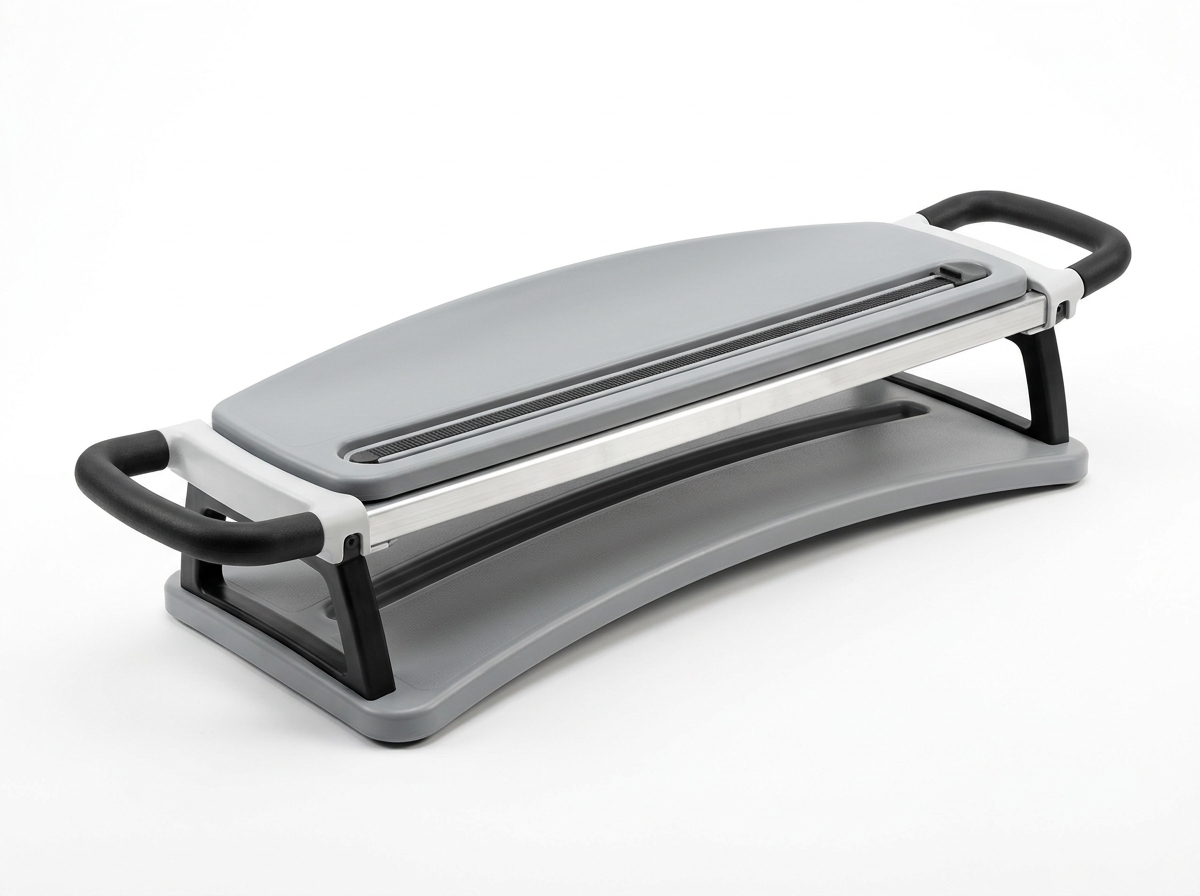
Transfer aid
Vive Transfer Board, 30 by 8 inches
A plain sealed wood board with a handle cut into each end, sized for a chair to bed or chair to commode gap.
- Brand
- Vive
- Listed size
- 30 in long by 8 in wide
- Material
- Sealed and coated wood, which Vive says resists cracking and chipping
- Weight capacity
- Listed at 440 lb. Vive’s own site publishes 400 lb for its 30 in wooden board, so check the figure on the packaging and manual you actually receive.
- Handles
- Two cut out grips, one at each end
- Typical price band
- $25 to $60
Honest limitation: a rigid board still needs the person to lift their own weight and scoot. If they cannot push up through their arms, you will end up dragging them across it, which is exactly the skin damage this transfer is supposed to prevent.
We earn a commission on this link. It does not change the price you pay, and it does not influence which equipment we cover.
Who a slide board suits
StatPearls lists slide board transfers for people with paraplegia, a lower limb amputation, or reduced leg strength and balance, and rules them out for anyone without the arm strength to push or the ability to follow instructions. In plain terms, they need to sit steadily, grip or fist the board, and take part in the move.
StatPearls describes one assistant for a slide board transfer, against three or four for a bed to stretcher move. That does not mean you should work alone from the start. Learn it with someone else in the room, and keep a second pair of hands for a new surface, a car seat, or a bad day.
When this stops working
A slide board lasts as long as sitting balance and an arm push last. When scooting gets hard, the ALS Network, a US nonprofit that provides ALS care services in California and Hawaii, points to boards with a gliding seat that carries the person across, which cuts down the lifting and twisting. When trunk control goes, a board is no longer the right answer and a full-body lift is.
Common questions
Does the board go under the thigh or under the buttock?
Under the buttock. StatPearls puts the board under the buttock specifically so the person cannot slide off it, and PASCO and the Shepherd Center both aim for about a third of the board’s length underneath. A board tucked under the thigh alone works its way out as soon as weight lands on it.
Where should their hands go?
Flat on the board beside their thighs, closed into fists, pushing through the surface between the knuckles. UMass Memorial Health is explicit that hands and fingers never go under the board. Fists also put less strain on the wrists than open palms.
Do they have to be dressed?
Yes. Home care guidance is that clothing must sit between the skin and the board, because bare skin rubbing on the board can cause injury. If the transfer is to a toilet or a shower seat, the Shepherd Center suggests covering the board with a pillowcase or applying lotion to reduce friction instead.
Will insurance pay for a transfer board?
The ALS Network says most transfer devices are not covered by insurance, and that ALS clinics and local care managers often run free equipment loan programs. Ask about a loan closet before you buy, and see our equipment funding page for the other routes.